


Introduction
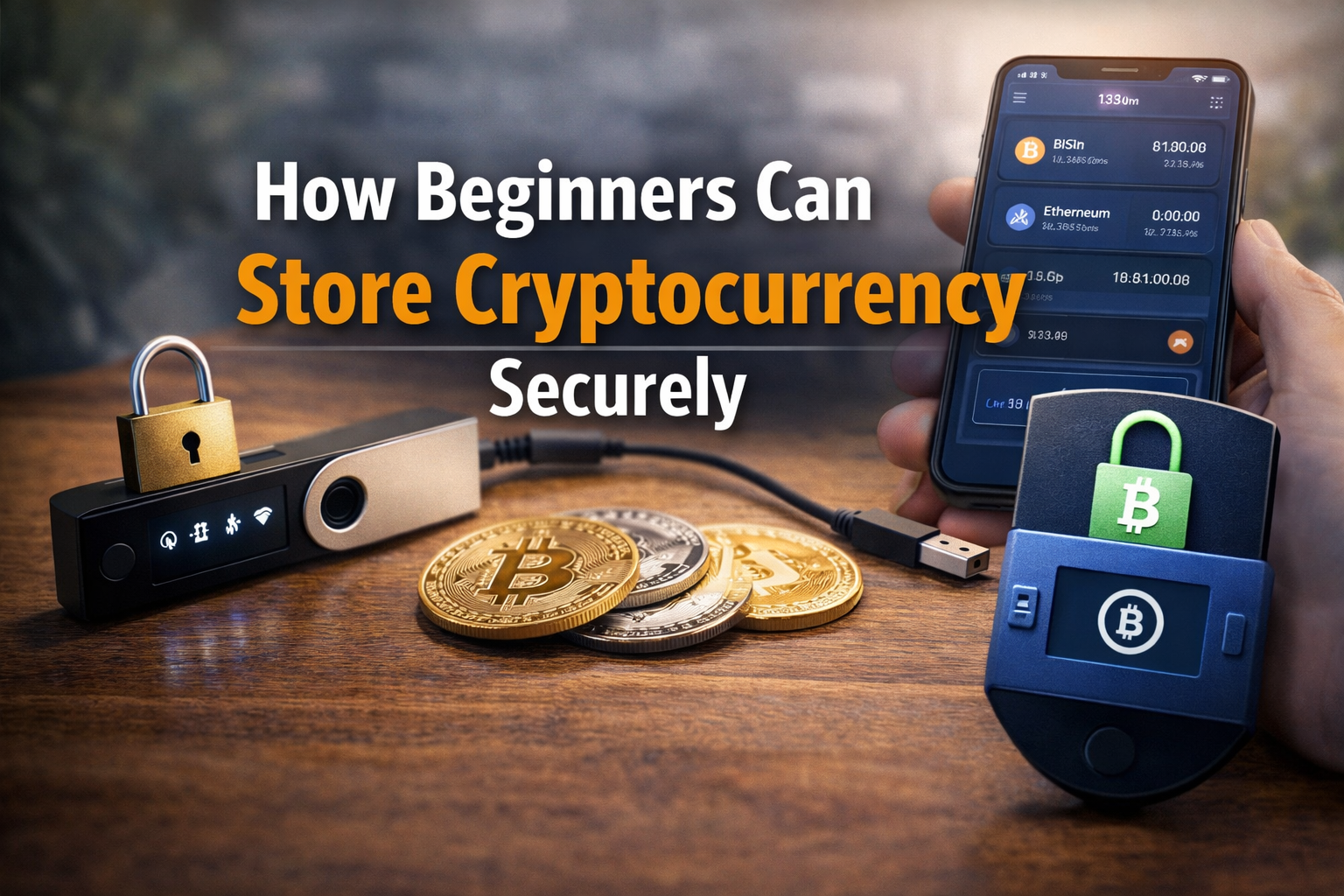
Cryptocurrency has become one of the most popular ways to invest, trade, and store value in the digital age. However, unlike traditional money stored in banks, cryptocurrencies require users to take full responsibility for their security. For beginners, this can feel overwhelming.

Understanding how to store cryptocurrency securely is essential to avoid hacks, scams, and accidental loss. This beginner-friendly guide will walk you through everything you need to know, including types of wallets, security practices, step-by-step instructions, and common mistakes to avoid.
What Does Storing Cryptocurrency Mean?
Storing cryptocurrency does not mean keeping physical coins. Instead, it involves managing private keys, which give you access to your digital assets on the blockchain.
Key Concepts
- Public Key: Like your bank account number (safe to share)
- Private Key: Like your password (must be kept secret)
- Wallet: A tool that stores your keys and allows transactions
If someone gains access to your private key, they can control your funds.
Why Cryptocurrency Security Is Important
Unlike traditional banking systems, there is no central authority to recover your lost funds.
Risks of Poor Security
- Hacking and cyber attacks
- Phishing scams
- Lost private keys
- Malware infections
- Unauthorized transactions
Once funds are lost, they are usually impossible to recover.
Types of Cryptocurrency Wallets
Choosing the right wallet is the first step toward secure storage.
1. Hot Wallets (Online Wallets)
These are connected to the internet and are easy to use.
Examples:
- Mobile wallets
- Desktop wallets
- Exchange wallets
Pros:
- Convenient
- Fast transactions
- Beginner-friendly
Cons:
- Higher risk of hacking
- Dependent on internet security
2. Cold Wallets (Offline Wallets)
These are not connected to the internet, making them more secure.
Examples:
- Hardware wallets
- Paper wallets
Pros:
- Very secure
- Safe from online attacks
Cons:
- Less convenient
- Can be lost if not stored properly
Hot Wallet vs Cold Wallet Comparison
| Feature | Hot Wallet | Cold Wallet |
|---|---|---|
| Internet Access | Yes | No |
| Security Level | Medium | High |
| Ease of Use | Easy | Moderate |
| Best For | Daily transactions | Long-term storage |
Step-by-Step Guide: How to Store Cryptocurrency Securely
Step 1: Choose the Right Wallet
Start by selecting a wallet based on your needs:
- Use hot wallets for small amounts
- Use cold wallets for large holdings
Popular beginner-friendly wallets include:
- Trust Wallet
- MetaMask
- Ledger (hardware wallet)
- Trezor (hardware wallet)
Step 2: Set Up Your Wallet
Follow these steps:
- Download the wallet from the official website
- Install the application
- Create a new wallet
- Generate your recovery phrase
Step 3: Backup Your Recovery Phrase
Your recovery phrase (seed phrase) is the most important part of your wallet.
Best Practices:
- Write it down on paper
- Store it in a safe place
- Do not store it online
- Do not share it with anyone
Step 4: Enable Security Features
Most wallets offer additional protection.
Enable:
- Two-factor authentication (2FA)
- PIN codes
- Biometric locks (fingerprint/face ID)
Step 5: Transfer Cryptocurrency to Your Wallet
After setting up:
- Copy your wallet address
- Paste it into the exchange withdrawal section
- Confirm the transaction
Always double-check the address before sending.
Step 6: Use Cold Storage for Large Amounts
If you hold a significant amount of crypto:
- Move funds to a hardware wallet
- Keep it offline when not in use
Best Security Practices for Beginners
Essential Tips
- Never share your private keys
- Avoid public Wi-Fi when accessing wallets
- Use strong, unique passwords
- Keep your software updated
- Install antivirus protection
Common Cryptocurrency Scams to Avoid
1. Phishing Attacks
Fake websites or emails that trick you into entering your credentials.
2. Fake Wallet Apps
Always download wallets from official sources.
3. Giveaway Scams
Promises of free crypto in exchange for sending funds.
4. Social Engineering
Scammers pretending to be support staff.
Example: Safe Storage Setup for Beginners
Here is a simple setup strategy:
| Purpose | Wallet Type | Amount Stored |
|---|---|---|
| Daily transactions | Mobile wallet | Small amount |
| Savings | Hardware wallet | Large amount |
This approach balances convenience and security.
How to Protect Your Private Keys
Your private key is the most critical part of your crypto security.
Protection Methods
- Store offline only
- Use hardware wallets
- Avoid screenshots or cloud storage
- Use encrypted backups if necessary
Advantages of Hardware Wallets
Hardware wallets are considered the safest option.
Benefits
- Offline storage
- Protection against malware
- Secure transaction signing
- Easy backup and recovery
Mistakes Beginners Should Avoid
Common Errors
- Keeping all funds on exchanges
- Not backing up recovery phrases
- Clicking unknown links
- Ignoring updates
- Using weak passwords
Advanced Tips for Extra Security
Once you are comfortable, consider:
- Using multi-signature wallets
- Splitting funds across multiple wallets
- Using a dedicated device for crypto
- Regularly reviewing transaction history
Frequently Asked Questions (FAQ)
1. What is the safest way to store cryptocurrency?
Using a hardware wallet with offline storage is the safest method.
2. Can I store crypto on exchanges?
Yes, but it is not recommended for long-term storage.
3. What happens if I lose my recovery phrase?
You will lose access to your funds permanently.
4. Are mobile wallets safe?
They are safe for small amounts if proper security measures are followed.
Conclusion
Storing cryptocurrency securely is one of the most important responsibilities for any crypto user, especially beginners. By understanding wallet types, protecting your private keys, and following best practices, you can significantly reduce the risk of losing your funds.
Start with simple steps: choose a trusted wallet, secure your recovery phrase, and use cold storage for large amounts. Over time, you can adopt advanced security methods to further protect your assets.
With the right knowledge and habits, you can safely store and manage your cryptocurrency with confidence.
