


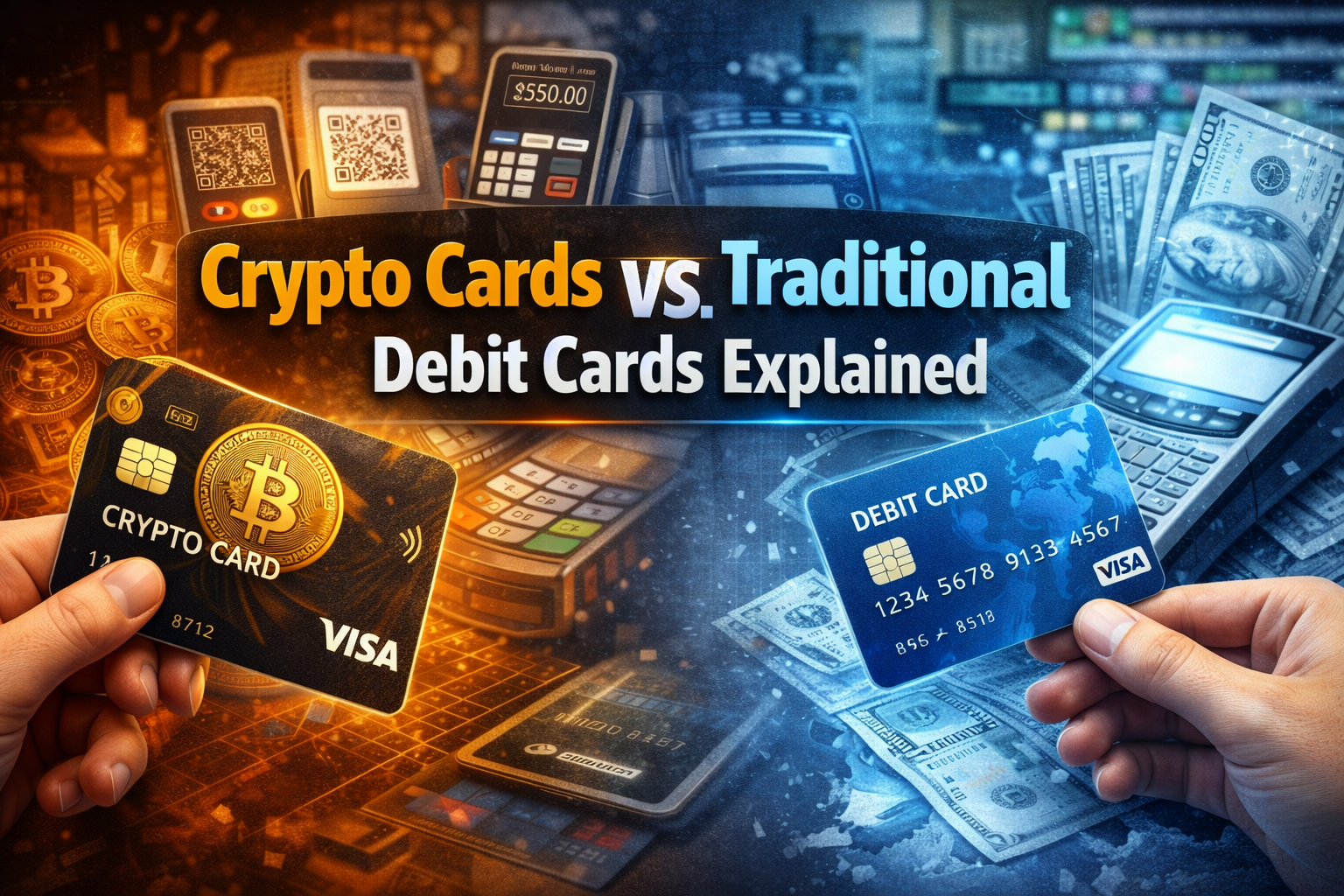
The way people pay for goods and services is evolving rapidly. While traditional debit cards have been the standard for decades, crypto cards are emerging as a modern alternative—bridging the gap between digital currencies and everyday spending.
But which one is better? And more importantly, which one is right for you?
This detailed, SEO-optimized guide explains everything in simple language, including how crypto cards and traditional debit cards work, their advantages and disadvantages, and the key differences you need to know.
Introduction
For years, traditional debit cards have been the go-to method for everyday transactions. They connect directly to your bank account and allow you to spend money instantly.
Now, with the rise of cryptocurrencies like Bitcoin and Ethereum, a new payment tool has entered the market: crypto cards.
At first glance, both card types look the same and can even be used in the same places. But behind the scenes, they work very differently.
- Traditional debit cards = Spend money from your bank
- Crypto cards = Spend cryptocurrency (converted to cash instantly)
Understanding this difference is essential if you want to make smarter financial decisions in today’s digital economy.
What Are Crypto Cards?
A crypto card is a payment card that allows you to spend cryptocurrency in real-world transactions.
Instead of being linked to a bank account, it is connected to:
- A crypto wallet
- A crypto exchange account
When you make a payment:
- Your cryptocurrency is automatically converted into fiat currency (like USD or PKR)
- The merchant receives normal money, not crypto
Key Features of Crypto Cards
- Linked to crypto wallet or exchange
- Instant crypto-to-fiat conversion
- Works with Visa/Mastercard networks
- Often includes crypto cashback rewards
What Are Traditional Debit Cards?
A traditional debit card is issued by a bank and linked directly to your checking account.
When you use it:
- Money is deducted instantly from your bank balance
- No conversion or extra steps are involved
Key Features of Debit Cards
- Connected to bank account
- Uses fiat currency only
- Widely accepted worldwide
- Simple and familiar system
Traditional debit cards remain one of the most commonly used payment methods globally.
How Crypto Cards Work
Crypto cards may seem simple, but there is a lot happening in the background.
Step-by-Step Process
- You hold cryptocurrency in your wallet
- You swipe or tap your crypto card
- The provider converts crypto into fiat instantly
- The merchant receives fiat currency
This means merchants don’t need to accept crypto directly—your card handles the conversion automatically
How Traditional Debit Cards Work
Traditional debit cards operate in a much simpler way:
Step-by-Step Process
- You have money in your bank account
- You swipe or tap your card
- The bank deducts funds instantly
- Payment is completed
No conversion, no volatility—just direct spending.
Crypto Cards vs Traditional Debit Cards: Quick Comparison
| Feature | Crypto Cards | Traditional Debit Cards |
|---|---|---|
| Source of Funds | Cryptocurrency | Bank account |
| Currency Type | Crypto (converted to fiat) | Fiat only |
| Conversion | Yes (instant) | No |
| Volatility Risk | High | None |
| Acceptance | Wide (via Visa/Mastercard) | Universal |
| Rewards | Crypto cashback | Limited rewards |
| Regulation | Less regulated | Highly regulated |
Key Differences Explained
1. Source of Funds
- Crypto Cards: Use digital assets like Bitcoin or stablecoins
- Debit Cards: Use money stored in your bank account
Traditional cards rely on banks, while crypto cards rely on blockchain-based assets.
2. Transaction Process
Crypto cards involve an extra step:
- Crypto → Fiat conversion
Debit cards skip this step entirely, making them faster and simpler.
3. Volatility Risk
One of the biggest differences:
- Crypto value can rise or fall rapidly
- Fiat money remains relatively stable
Spending crypto could mean:
- Paying more (if price rises later)
- Losing value (if price drops before spending)
4. Rewards and Incentives
Crypto cards often offer:
- Bitcoin or crypto cashback
- Staking rewards
Traditional debit cards usually offer:
- Minimal or no rewards
This makes crypto cards attractive for tech-savvy users.
5. Accessibility and Requirements
- Debit Cards: Require a bank account
- Crypto Cards: Require a crypto wallet or exchange account
Some crypto cards are more accessible globally, especially for unbanked users.
6. Fees Structure
Crypto cards may include:
- Conversion fees
- Exchange rate spreads
- Withdrawal fees
Debit cards typically have:
- Lower and more predictable fees
Advantages of Crypto Cards
1. Spend Cryptocurrency Easily
- No need to manually convert crypto
- Works like a normal card
2. Crypto Rewards
- Earn Bitcoin or other crypto on purchases
- Build crypto portfolio passively
3. Global Accessibility
- Useful in regions with limited banking access
4. Multi-Currency Support
- Use different cryptocurrencies in one card
Disadvantages of Crypto Cards
- Price volatility risk
- Hidden conversion fees
- Limited regulation
- Tax implications in some countries
Advantages of Traditional Debit Cards
1. Simplicity
- Easy to understand and use
- No technical knowledge required
2. Stability
- No risk of value fluctuation
3. Strong Regulation
- Consumer protections
- Fraud protection
4. Universal Acceptance
- Accepted almost everywhere
Disadvantages of Traditional Debit Cards
- Limited rewards
- No exposure to crypto growth
- Requires a bank account
Detailed Comparison Table
| Criteria | Crypto Cards | Traditional Debit Cards |
|---|---|---|
| Ease of Use | Moderate | Very Easy |
| Security | Depends on provider | High |
| Speed | Fast (with conversion) | Very Fast |
| Risk | Market volatility | Low |
| Rewards | High (crypto cashback) | Low |
| Financial Control | Medium | High |
| Innovation | High | Low |
| Long-Term Value | Potentially high | Stable |
Real-Life Use Cases
Scenario 1: Everyday Shopping
- Debit Card → Best option
- Crypto Card → Works but less practical
Scenario 2: Crypto Investor
- Crypto Card → Better (spend gains easily)
Scenario 3: Budgeting
- Debit Card → More stable and predictable
Scenario 4: Earning Rewards
- Crypto Card → Better due to cashback in crypto
Can You Use Both Together?
Yes—and this is the smartest approach.
Many users:
- Use debit cards for stability
- Use crypto cards for rewards and flexibility
This combination gives you:
- Security
- Growth potential
- Convenience
Risks and Security Considerations
Crypto Cards
- Exchange hacks
- Wallet security risks
- Regulatory uncertainty
Debit Cards
- Fraud and theft (but insured)
- Bank-related issues
Future Trends in Payment Systems
The future of payments is likely to include:
- Crypto integration with banking
- Hybrid cards (fiat + crypto)
- Central bank digital currencies (CBDCs)
- Increased global adoption of crypto payments
Crypto cards are expected to grow as blockchain adoption increases.
Quick Summary
- Crypto cards = Spend crypto with conversion
- Debit cards = Spend bank money directly
- Crypto cards offer rewards but come with risk
- Debit cards offer stability but limited benefits
Conclusion
So, Crypto Cards vs Traditional Debit Cards: Which is better?
It depends on your needs.
- Choose crypto cards if you want innovation, rewards, and crypto usage
- Choose traditional debit cards if you want simplicity, stability, and security
For most people, the best strategy is to use both:
- Debit cards for everyday expenses
- Crypto cards for maximizing rewards and using digital assets
As the financial world continues to evolve, understanding these tools will help you stay ahead and make smarter financial decisions.
