


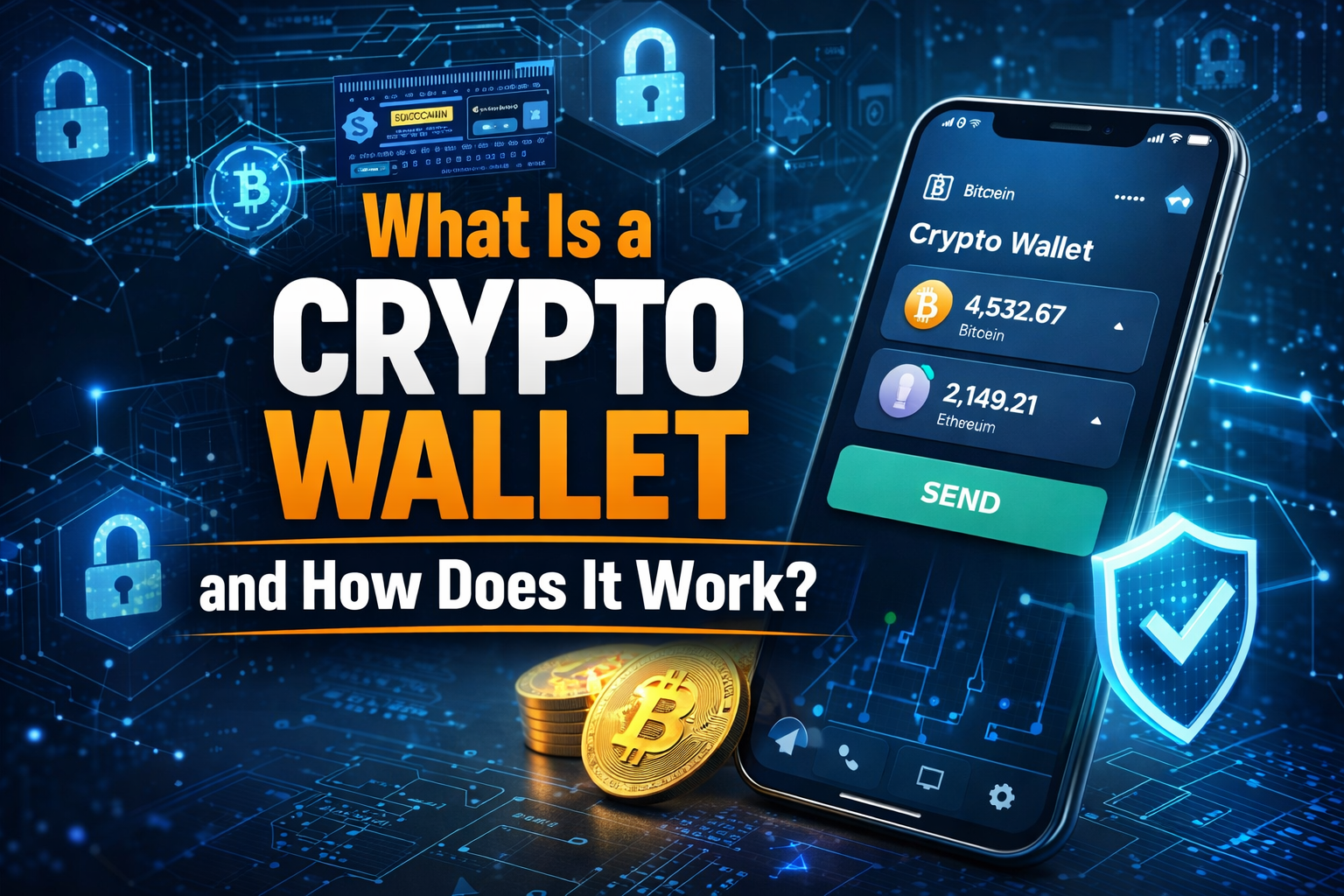
Cryptocurrency has changed how people think about money. Instead of physical cash or traditional bank accounts, you can now store and transfer digital assets like Bitcoin and Ethereum. But to use cryptocurrency safely, you need something called a crypto wallet.
If you’re new to crypto, this might sound confusing. Don’t worry. This guide will explain everything in simple terms—what a crypto wallet is, how it works, and how to use it safely.
What Is a Crypto Wallet?
A crypto wallet is a digital tool that allows you to store, send, and receive cryptocurrencies.
But here’s something important:
A crypto wallet does NOT actually store your coins.
Instead, it stores private keys, which are special codes that give you access to your cryptocurrency on the blockchain.
Simple Example
Think of it like this:
- Your cryptocurrency = money in a bank
- Blockchain = the bank system
- Crypto wallet = your bank app
- Private key = your password
Without your private key, you cannot access your funds.
How Does a Crypto Wallet Work?
To understand how crypto wallets work, you need to know about public keys and private keys.
Public Key (Like an Address)
- This is like your account number
- You can share it with others
- Used to receive crypto
Private Key (Like a Password)
- This is your secret code
- Used to access and send funds
- Must NEVER be shared
How Transactions Happen
Here’s a simple step-by-step process:
- You enter the recipient’s public address
- You choose the amount to send
- Your wallet uses your private key to sign the transaction
- The transaction is sent to the blockchain
- It gets verified and completed
Visual Diagram of How Crypto Wallets Work
Your Wallet (Private Key)
        ↓
Signs Transaction
        ↓
Blockchain Network
        ↓
Recipient Wallet (Public Key)
Types of Crypto Wallets
Crypto wallets come in different types. Each has its own features, security level, and use case.
1. Hot Wallets (Online Wallets)
Hot wallets are connected to the internet.
Examples:
- Mobile apps
- Desktop software
- Web wallets
Advantages:
- Easy to use
- Quick access
- Good for beginners
Disadvantages:
- More vulnerable to hacking
- Requires internet connection
2. Cold Wallets (Offline Wallets)
Cold wallets are not connected to the internet.
Examples:
- Hardware wallets
- Paper wallets
Advantages:
- Very secure
- Protected from online attacks
Disadvantages:
- Less convenient
- Can be lost if not stored properly
Wallet Comparison Table
| Feature | Hot Wallet | Cold Wallet |
|---|---|---|
| Internet connection | Yes | No |
| Security level | Medium | High |
| Ease of use | Easy | Moderate |
| Best for | Daily use | Long-term storage |
Types of Crypto Wallet Applications
Let’s break down common wallet formats:
Mobile Wallets
- Installed on smartphones
- Best for everyday transactions
Desktop Wallets
- Installed on computers
- More control than mobile wallets
Web Wallets
- Run in browsers
- Easy access but less secure
Hardware Wallets
- Physical devices (USB-like)
- Store keys offline
Paper Wallets
- Printed private and public keys
- Very secure but risky if lost
What Can You Do With a Crypto Wallet?
A crypto wallet is not just for storage. It allows you to:
Send Cryptocurrency
Transfer funds to other wallets worldwide.
Receive Cryptocurrency
Share your public address to get payments.
Store Digital Assets
Keep Bitcoin, Ethereum, and other tokens safely.
Connect to Apps (DeFi & NFTs)
Some wallets allow you to:
- Use decentralized apps (DApps)
- Buy NFTs
- Earn interest on crypto
Key Features of Crypto Wallets
Most modern wallets include:
- Balance tracking
- Transaction history
- QR code scanning
- Multi-currency support
- Security features (PIN, biometrics)
Security in Crypto Wallets
Security is one of the most important aspects of crypto wallets.
Seed Phrase (Recovery Phrase)
When you create a wallet, you get a seed phrase:
- 12–24 random words
- Used to recover your wallet
- Must be stored safely
Important Rules:
- Never share your seed phrase
- Write it down offline
- Do not store it in screenshots
Two-Factor Authentication (2FA)
Adds an extra layer of protection:
- Requires a second verification step
- Helps prevent unauthorized access
Private Key Protection
- Always keep it secret
- If someone gets your key, they can steal your funds
Custodial vs Non-Custodial Wallets
This is a very important concept.
Custodial Wallets
- Managed by a third party (like exchanges)
- You don’t control private keys
Pros:
- Easy to use
- Password recovery available
Cons:
- Less control
- Risk if platform is hacked
Non-Custodial Wallets
- You control your private keys
Pros:
- Full control
- Higher security
Cons:
- No recovery if you lose keys
Comparison Table
| Feature | Custodial Wallet | Non-Custodial Wallet |
|---|---|---|
| Control | Platform | You |
| Security | Medium | High |
| Recovery | Yes | No |
| Ease of use | Easy | Moderate |
How to Choose the Right Crypto Wallet
Choosing the right wallet depends on your needs.
For Beginners
- Use a mobile or web wallet
- Easy setup and usage
For Long-Term Investors
- Use a hardware wallet
- Maximum security
For Active Traders
- Use a mix of wallets
- Hot wallet for trading
- Cold wallet for storage
Common Mistakes to Avoid
Here are some mistakes many beginners make:
Sharing Private Keys
Never share your private key with anyone.
Losing Seed Phrase
If you lose it, you lose access to your funds forever.
Using Untrusted Wallets
Always use trusted and well-reviewed wallets.
Ignoring Security Updates
Keep your wallet updated to stay protected.
Advantages of Crypto Wallets
- Full control over your money
- Fast global transactions
- No need for banks
- Supports multiple cryptocurrencies
Limitations of Crypto Wallets
- No recovery if keys are lost
- Risk of hacking (hot wallets)
- Requires basic technical knowledge
- Mistakes can be irreversible
Real-Life Example
Let’s say you want to send Bitcoin to a friend:
- Your friend shares their wallet address
- You open your crypto wallet
- Enter the address and amount
- Confirm the transaction
- Blockchain processes it
Within minutes, your friend receives the funds.
Future of Crypto Wallets
Crypto wallets are evolving quickly.
In the future, they may include:
- Better security features
- Easier user interfaces
- Integration with banking services
- Support for more digital assets
They are becoming a key part of the digital financial system.
Frequently Asked Questions (FAQs)
Do I need a crypto wallet to use cryptocurrency?
Yes, you need a wallet to store and manage your crypto.
Are crypto wallets safe?
Yes, if used properly with strong security practices.
Can I have multiple wallets?
Yes, many users have multiple wallets for different purposes.
What happens if I lose my wallet?
You can recover it using your seed phrase—if you have it.
Conclusion
A crypto wallet is your gateway to the world of cryptocurrency. It doesn’t store your coins directly but gives you access to them through private keys. Understanding how wallets work is essential for using crypto safely and effectively.
Whether you choose a hot wallet for convenience or a cold wallet for security, the key is to protect your private keys and seed phrase at all costs. With the right knowledge and careful use, crypto wallets can give you full control over your digital assets and open the door to a new financial future.
As cryptocurrency continues to grow, crypto wallets will become even more important. Learning how they work today will prepare you for the future of digital money.
