
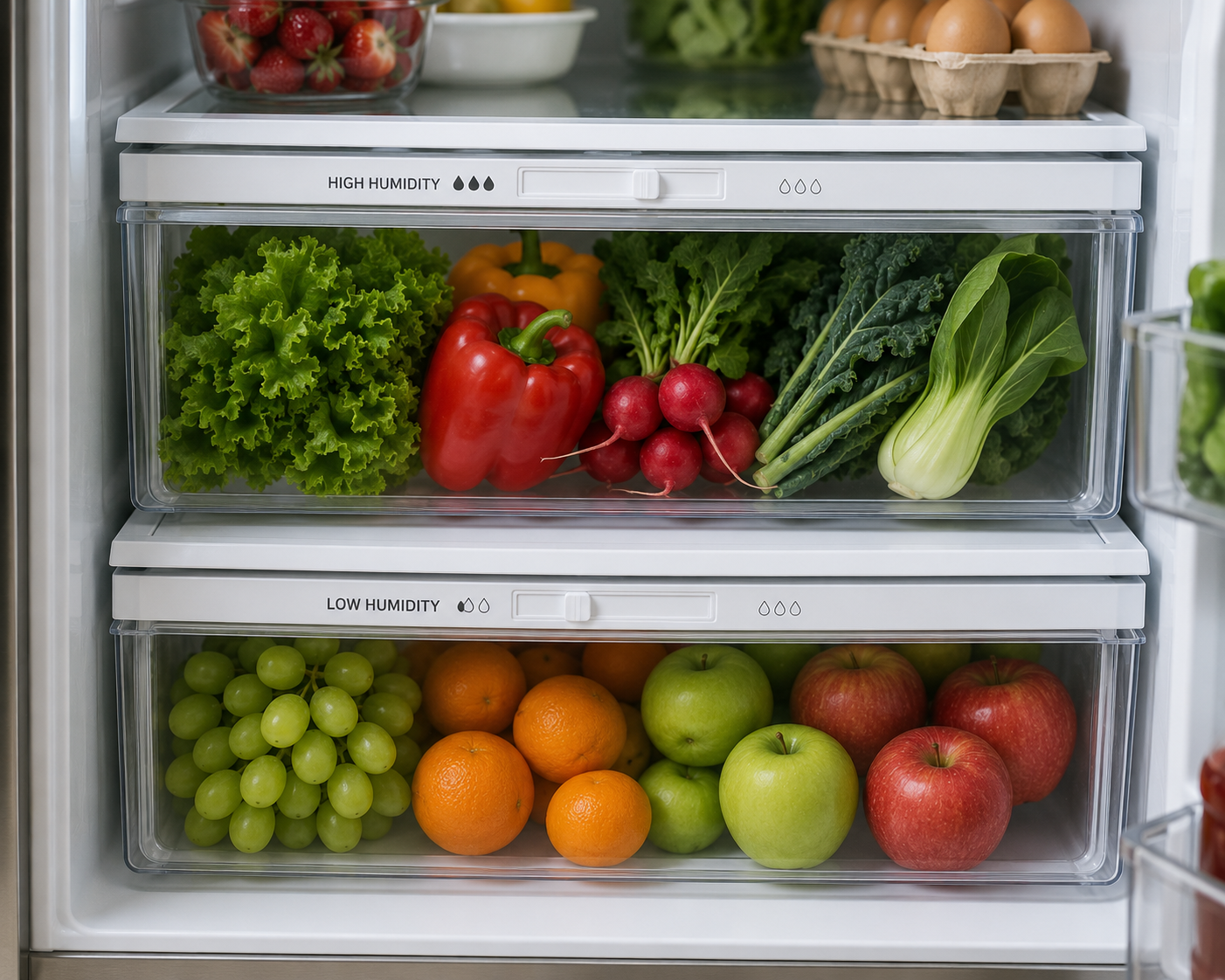
When you open your fridge to find wilting spinach or mouldy strawberries, it’s very disappointing. It costs a lot of money to buy fresh food that you then throw away after a few days. The excellent news is that most modern freezers have an answer built in: crisper drawers that can be adjusted.
The little “high” and “low” sliders are actually very useful tools for making your fruits and veggies last longer. By changing how much water is in the box, you can make the ideal environment for different kinds of fresh foods. It will only take seconds to sort your food and make these settings right, but it will save you hundreds of dollars a year in lost food. To learn how these boxes work, what goes in each one, and how to keep your food fresh, keep reading.
How to Figure Out the Humidity in Your Fridge
An adjustable vent in the fridge drawer is an effortless way to control humidity. You literally open or close a small window on the drawer when you slide the control to a certain setting.
When the vent is shut all the way, air can’t easily get out. This keeps the moisture that your fruits and veggies give off inside the bin, making it a very humid place to be. On the other hand, opening the vent lets air move freely. The water evaporates and enters the rest of the refrigerator, making it less wet. For different kinds of food to grow well, they need very different conditions. The main reason they spoil, wilt, and rot early is that they are grouped wrong.
Setting for High Humidity
The high-humidity drawer is like a locked vault for things that need to keep their wetness to stay crisp and fresh.
What Produce Does for You
This setting is great for veggies with thin skins that tend to wilt. The refrigerator is the place to store leafy veggies like lettuce, spinach, and kale. It is also a great place to grow broccoli, Brussels sprouts, carrots, cauliflower, green beans, and plants.
How it Works
Because most refrigerators are dry, vegetables with a lot of surface area or thin skin lose water very fast. These veggies won’t dry out because you closed the vent and kept the moisture inside the drawer. For a lot longer, they stay firm, crisp, and ready to eat.
How to Use It
Do not wash your veggies before putting them away in a high-humidity drawer to get the most out of them. Even in places with a lot of wetness, mould can grow on leaves that have too much water on them. Make sure you don’t pack the drawer too tightly either. Let some air flow around the food by leaving some space.
Setting for Low Humidity
The low-humidity box is for foods that go bad quickly or give off gases as they age.
What Produce Does for You
For the low-humidity drawer, fruits are the best choice. This is a great place to grow apples, pears, peaches, plums, and vegetables. Some veggies that go bad quickly should also be on the list. These include bell peppers, avocados, and summer squash.
How it Works
As many plants ripen, they give off ethylene gas. If you close the door and keep this gas inside, the fruit will ripen too quickly and go bad. By opening the vent, the ethylene gas can safely leave. It also stops mist from forming, which helps keep mould from growing on fruits that are easily damaged by water.
How to Use It
Fruits that are high in ethylene should never be near leafy greens. If an apple falls into your high-humidity drawer and gets stuck inside, the ethylene gas will turn your greens yellow and wilt them almost overnight.
What Not to Do: Common Mistakes
Even if you set the sliders properly, some bad habits can ruin your food. The most common mistake is mixing foods that don’t go together. When you put apples and spinach in the same drawer, you must choose a setting that will harm one of them. As soon as you get home from the store, take the time to sort your things.
Another mistake that people often make is overcrowding. When you put too many things in one box, you completely block airflow, which creates wet spots where bacteria can grow. If all of your drawers are full, you might want to move tougher foods like apples and carrots to the main shelves of your fridge.
Getting the Most Freshness
Even though using your crisper drawers right is a good start, there are a few more things you can do to make sure your food stays fresh longer. Set the temperature of your fridge to 37°F (3°C). It’s cold enough to slow down the developing process without being so cold that fragile things freeze. Cut up your veggies ahead of time to save time at the grocery store. Then, put them in airtight glass or plastic containers instead of the crisper drawers. Finally, remember that some fruits and vegetables don’t belong in the fridge. The best way to keep bananas, onions, potatoes, and tomatoes is at room temperature on your counter or in a pantry. They will all last longer and taste better.
Keep your Food Fresher for Longer
It’s not necessary to buy expensive tools or follow difficult steps to store food properly. You can cut down on food waste in your home by a lot just by learning which foods like it wet and which need airflow. Take a moment to sort your food the next time you open your grocery bags. Separate your fruits and vegetables by moving the box sliders, and you’ll have fresh, tasty food all week.
FAQs
1. Do all freezers have controls for humidity?
Most modern freezers have at least one crisper drawer that you can move around. If, on the other hand, your fridge has plain doors that don’t slide, they naturally act as high-humidity bins because they hold water. To make it look like the humidity level is low, you can slightly open the box.
2. Where should I keep my berries?
Berries go rotten quickly and are likely to get mould on them. To keep wetness from building up, they usually do best in places with low humidity. However, many experts say that instead of putting them in a crowded drawer, they should be kept on a normal fridge shelf in a container lined with paper towels.
3. Does washing food before putting it away shorten its life?
Yes, washing fruits and veggies adds water that can make them go bad quickly and cause mould to grow in the fridge. When you are about to eat or cook something, you should always wash it first.
4. If I put the humidity slider in the middle, what will happen?
When the slider is halfway up, the humidity level is mild. As long as you don’t put too many fragile things in this one box, it’s a good compromise. But for the best results, use settings for fully open and fully closed drawers that are different from each other.
5. Does it matter if the temperature is high or low?
Oranges, lemons, and limes are citrus foods that do best in places with low humidity. If you store them with the vent open, water won’t be able to build up on the rinds, which stops them from getting soft spots and mould.

Hannah is a home and kitchen writer who focuses on practical cooking, meal prep, food storage, appliance care, and everyday kitchen organization. She enjoys sharing realistic tips that help make busy home routines feel simpler and less stressful. Through experience-based articles and easy-to-follow advice, Hannah aims to help readers save time, reduce food waste, organize their kitchens more efficiently, and feel more confident managing daily cooking and household tasks.