The late-afternoon worry is familiar to most. As dinnertime approaches, you stare at a random array of food in an open refrigerator. After a long day at work or managing a household, it can feel intimidating to create a nutritious supper from scratch. Takeaway menus or boring dishes generally appear at this time.
Over the years, I’ve discovered that minimising daily stress doesn’t require spending all of Sunday cooking or following a rigorous, joyless regimen. Instead, create a flexible, sustainable weekly meal planning programme. A well-planned kitchen saves hours of cooking and cleanup time, reduces food waste, saves money, and calms your nights. Let’s develop a routine that supports your life rather than battling it.
Problems with Over-Engineering Your Menu
Meal prep beginners often jump in headfirst. They spend hours browsing social media for five intricate, restaurant-quality recipes with dozens of unique ingredients. By Sunday night, their kitchen is a wreck, they are exhausted, and they have containers of identical food they will tire of by Wednesday.
The most typical mistake is treating meal prep like a race. A sustainable schedule is simple and realistic. A strict batch-cooking schedule will fail you if you despise eating the same dish three days in a row. If Tuesdays are often hectic owing to late meetings or family obligations, cooking a meal that demands an hour of active kitchen time that night will frustrate you.
Ignoring inventory is another common mistake. Instead of using up cupboard and freezer items, we shop for meals we want to cook. This causes cluttered shelves, rotting produce in the crisper drawer, and guilt. Look at your kitchen habits and timetable before making a grocery list to be efficient.
Dynamic Prep Timeline Anchors Your Week
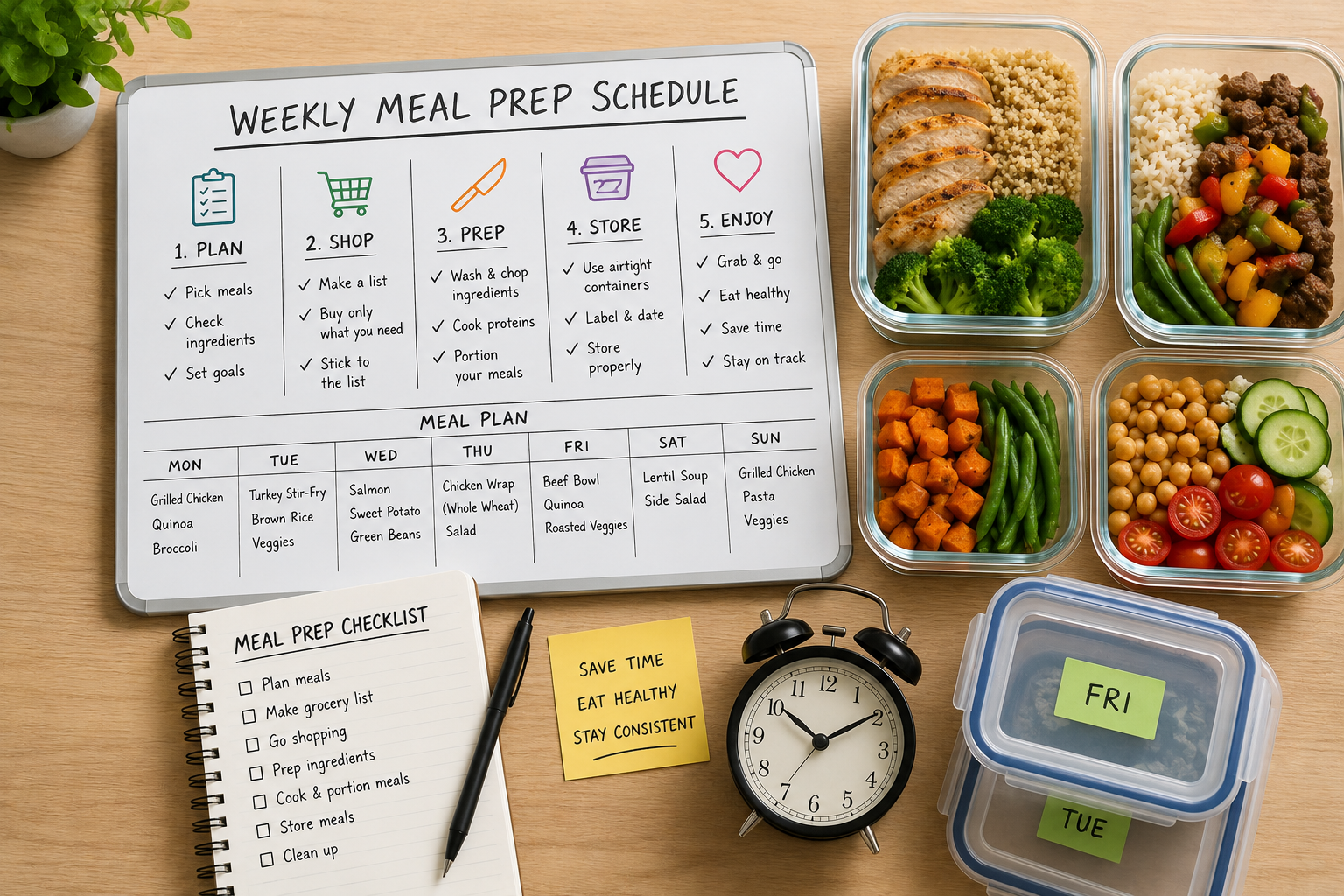
A great meal prep routine takes more than one day. Breaking the procedure into smaller, bite-sized activities over two or three days reduces kitchen burnout and keeps food fresh. I divide my strategy into planning, targeted shopping, and high-impact prep.
Check your upcoming week for busy nights. These days call for easy meals like slow-cooker meals, freezer leftovers, or sheet-pan dinners. After knowing your timetable, choose recipes with overlapping ingredients in mind. Try to pair a recipe that uses half a bunch of cilantro or half an onion with another that uses the rest.
If time allows, shopping should be done apart from heavy cooking. Friday night or Saturday morning grocery shopping and Sunday afternoon chopping and cooking break up the physical labour. You can also wash and dry your vegetables ahead of time, which extends their lifespan.
Full Meal Cooking vs. High-Impact Prep
Meal prep benefits don’t require prepping complete meals. Component prep generally works better for busy households. This strategy creates building blocks that you can rapidly combine into weekly meals.
Consider the meal components that take the longest or make the biggest mess. Weekday cooking time can be cut in half by roasting a large tray of adaptable vegetables, boiling quinoa or brown rice, and marinating proteins. Because the core work is done, you may only need 15 minutes to cook on Tuesday night.
For completely prepared meals, choose those that taste better after a day or two in the fridge. Perfect examples: soups, stews, chillis, and curries. They reheat well and freeze well if your plans change midweek. However, delicate shellfish, cream-based sauces, and garnished salads should be cooked fresh.
Smart Storage and Food Longevity Guidelines
Your meal prep is only as good as your storage strategy. Investing in the right containers and understanding how different ingredients behave in cold storage will help you avoid wasting your hard work. Glass containers are highly recommended for main dishes because they are non-porous, do not retain odours or stains, and can transition safely from the refrigerator to the oven or microwave.
To give you a practical baseline for organising your refrigerator, here is a quick guide on how long standard prepped components remain at peak quality:
| Food Component | Refrigerator Shelf Life | Best Storage Practice |
| Cooked Grains (Rice, Quinoa) | 4 to 5 Days | Store in airtight containers with a tight seal |
| Roasted Vegetables | 3 to 4 Days | Cool completely before sealing to prevent sogginess |
| Chopped Raw Vegetables | 5 to 7 Days | Line the container with a paper towel to absorb moisture |
| Cooked Poultry and Meat | 3 to 4 Days | Keep on the middle or lower shelves, where it is coldest |
| Homemade Dressings and Sauces | 1 to 2 Weeks | Store in glass jars and shake well before using |
Moisture is the ultimate enemy of prepped food. When storing chopped greens or raw vegetables, placing a clean, dry paper towel inside the container helps trap excess condensation, extending their freshness by several days. Additionally, always let hot food cool down to room temperature before sealing it and placing it in the fridge. Putting hot containers directly into a cold environment raises the internal temperature of your refrigerator, potentially endangering nearby perishable items.
Troubleshooting Common Prep Hurdles
Your meal planning process will sometimes fail, even with the best intentions. Readers sometimes remark that prepped vegetables become sticky or lose texture. The cause is generally washing practices. Berries, leafy greens, and chopped vegetables must be totally dried before storage if washed. Before storing, lay them out on a clean kitchen towel for an hour or use a salad spinner.
If you wind up tossing away prepped food at the end of the week because your schedule changed or you didn’t want to eat it, freeze it. Make “dump meals” for the slow cooker or freezer-friendly casseroles. No waste if Wednesday night turns into a surprise dinner with friends—your frozen food can sit in the freezer for a week.
Finally, narrow your focus if the process is too laborious. You don’t need to prepare breakfast, lunch, and dinner simultaneously. Try prepping only your workweek lunches or slicing your supper vegetables. You can progressively add to your routine after that modest habit feels natural.
Making Kitchen Routines Sustainable
Create a weekly food prep schedule to help your future self, not to perfect your kitchen. By switching from making complete meals to preparing flexible, high-quality ingredients, you develop a life-adapting system.
Start small this week. Select two vegetables to chop, cook one batch of your favourite grain, and plan your busiest evenings. You will eventually establish a rhythm that makes the kitchen a place of comfort and sustenance rather than everyday tension. Make your kitchen your ally, simplify your plans, and enjoy the extra time and peace of mind.
Frequently asked questions
1. How can I avoid dry reheated meal prep?
Before reheating, add moisture to revive prepared food. Top your container with a tablespoon of water, broth, or a damp paper towel for microwave use. Heat at medium power instead of full blast and swirl halfway through to distribute heat evenly without drying out the edges.
2. Can fresh potatoes be prepped ahead of time without browning?
You can cut potatoes beforehand, but air will oxidise them and turn them brown or grey. Avoid this by placing diced or sliced potatoes in a basin, covering them with cold water, and adding lemon juice or white vinegar. Drain and pat them dry after 24 hours in the fridge before cooking.
3. Can prepared, refrigerated meals be frozen?
If cooked meals are refrigerated within two hours and frozen within three to four days, they can be frozen safely. Instead of waiting until they spoil, freeze them early in the week for optimal quality.
4. How can I prevent lunchtime avocado browning?
Avocados brown quickly from oxygen-exposed enzymes. Leaving the pit in; coating the flesh with lime or lemon juice; and wrapping it tightly in plastic wrap, pressing it against the fruit, will slow this down. You can also prepare avocado the day you eat it.
5. What are the best meals to prep without a microwave at work?
Great choices include grain bowls, substantial pasta salads with vinaigrette dressing, chicken salad wraps, and cold noodles. Focus on recipes with fresh textures and vibrant flavours that are delicious at room temperature or slightly cooled.

Hannah is a home and kitchen writer who focuses on practical cooking, meal prep, food storage, appliance care, and everyday kitchen organization. She enjoys sharing realistic tips that help make busy home routines feel simpler and less stressful. Through experience-based articles and easy-to-follow advice, Hannah aims to help readers save time, reduce food waste, organize their kitchens more efficiently, and feel more confident managing daily cooking and household tasks.