
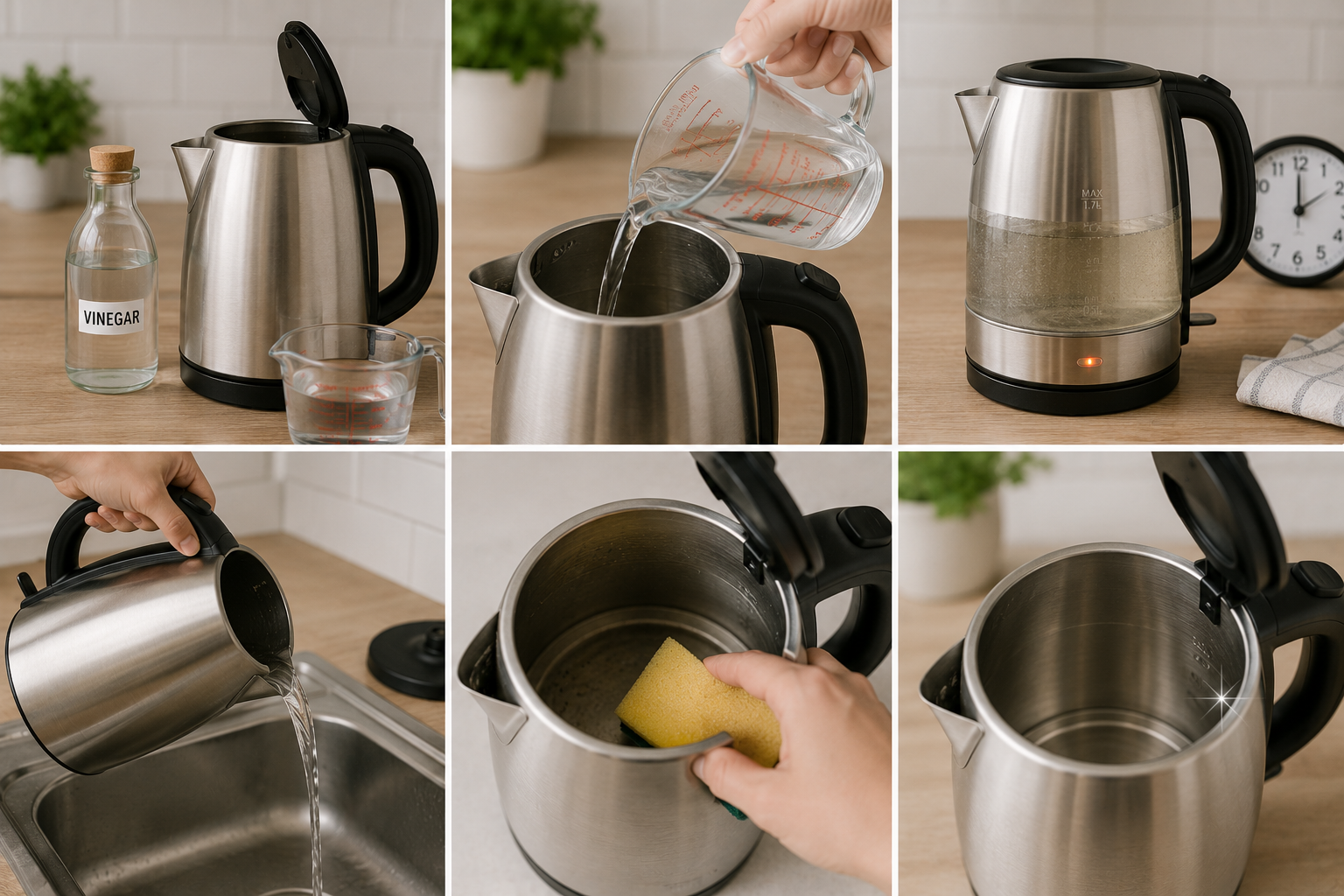
If you open your kettle and find a powdery, white, or crusty substance on the heating element, that is limescale. It is a common household problem, especially in areas with hard water, where it builds up unnoticed. Eventually, this seemingly harmless deposit can harden into a stony, insulating layer, which not only increases boiling time but also makes the kettle work harder and sometimes even ends up in your tea or coffee.
Many people think that limescale build-up makes a kettle unusable or that strong, harmful chemical cleaning agents are needed to remove it. Fortunately, you do not need to buy expensive commercial descaling agents to get your kettle sparkling clean again. One of the best (and food-safe) remedies for limescale is the inexpensive distilled white vinegar you have in your kitchen cupboard. Cleaning with vinegar can dissolve calcium carbonate quickly, but for the best results, you must carefully control the dilution ratio and temperature of the vinegar and rinse thoroughly to protect your kettle and remove any acidic taste residue.
Why Mineral Accumulation Matters for Your Kettle:
Limescale consists mainly of calcium and magnesium – elements that occur naturally in tap water. When water boils, some of it turns into steam, leaving behind concentrated mineral deposits on metal and plastic surfaces that are difficult to remove. Drinking water containing these trace elements is completely harmless to human health. Limescale acts as an insulating layer over the internal heating element.
When a kettle is covered with a thick layer of limescale, the internal thermostat struggles to accurately measure the water temperature. The energy and time required to boil the water using the heating element double. This extra thermal load shortens the lifespan of the kettle, damages the internal wiring over time, and increases your daily electricity consumption. If limescale buildup becomes too severe, localised overheating of the base can trigger the automatic shut-off function before the water has fully boiled.
Common Misconceptions about Cleaning Kettles:
Some homeowners, as soon as they see white limescale on the bottom of their kettle, immediately grab a rough green scouring pad or steel wool and start scraping it off. This is an irreparable mistake. The bases of modern kettles are made of polished stainless steel, which scratches easily. Vigorous cleaning can damage the smooth, factory-applied surface, creating small grooves where minerals adhere more easily. Scratches on the surface double the rate at which limescale forms.
Another common mistake is the use of structural acids, such as undiluted pure vinegar or dry-boiling vinegar. Boiling pure vinegar produces a sharp vapour with an extremely strong odour that is difficult to remove. More importantly, prolonged boiling of highly concentrated acid can damage the water level window and the precise silicone seals and rubber gaskets around the base plate. Diluting and controlled heating can preserve the structural integrity of the appliance.
Basic Steps for Successful Descaling:
Before you start cleaning, ensure you have the right tools ready for smooth operation. You do not need a whole range of specialised tools, but the choice of the right cloth and the right acid will have a major impact on the result.
Distilled white Vinegar: The best vinegar for general cleaning is clear, inexpensive vinegar with an acidity of 5%. This leaves no residue. Do not use apple cider vinegar or balsamic vinegar, as the sugar and dye in them will discolour the heating plate.
Filtered or Distilled Water: When boiling and rinsing, using purified water prevents other minerals from adhering to the freshly cleaned metal.
Microfibre Cloth or Soft Sponge: This non-abrasive cleaning agent removes loose mineral dirt and protects the polished base.
Small pastry brush or clean toothbrush: perfect for gently removing limescale from fine-mesh down filters without damaging the filter material.
Removing Limescale with Vinegar: A Step-by-Step Procedure
This is a carefully designed, systematic method to thoroughly clean your kettle without damaging the internal parts. The following steps optimise the chemical reaction of the vinegar and minimise contact between the acid and the delicate internal seals.
Prepare the Diluted Solution: Pour equal parts water and distilled white vinegar into the kettle. Add water until it is below the water level so that the limescale layer is completely submerged, but leave enough space to prevent the acidic foam from overflowing when the solution is heated.
Bring the Mixture to a Gentle Simmer: Turn on the kettle and let the vinegar solution heat up slowly. Watch the kettle closely and turn it off manually as soon as the water starts to boil. Avoid vigorous boiling to prevent hot, acidic steam from splashing into the room.
Extended Soaking Time: Leave the heated solution in the kettle for 30 to 45 minutes. If the limescale is thick and brown, let the solution soak for an hour. As it cools, the acid will continue to dissolve the limescale layer, even without scrubbing.
Emptying and Cleaning the Inside: Pour the cooled liquid into the sink to remove any residue, and then pour the mixture directly into the sink drain. Gently wipe the inside of the base with a soft microfibre cloth or sponge. Loosened limescale should come off easily.
Clean the Mesh Pour Spout Filter: If your model has one, remove and clean the mesh filter at the outlet. Use a clean toothbrush dipped in a small amount of fresh vinegar to gently remove any remaining white residue. Rinse thoroughly under running water and replace the filter.
Rinsing: Fill the kettle to the maximum water level and bring the water to a boil. Then pour the water out completely. Repeat this boiling and pouring process two to three times. This is an important step to remove any remaining vinegar odour from the heating element.
Safety Considerations for Electric Appliances:
Safety must always be the highest priority during cleaning, as you are using an appliance that is directly connected to a high-voltage source. Never immerse the kettle, the power cord, or the round charging base in water or cleaning agents. Always unplug the appliance completely before wiping the exterior with a wrung-out, damp cloth.
Always consult your family members when descaling. If you leave a kettle filled with diluted vinegar on the counter to soak, someone could easily spill the acidic mixture into their morning coffee. That would be a shock! If you are really concerned, you can place a note next to the appliance during soaking, reminding everyone not to drink the cleaning solution.
Recommendations for Long-Term Maintenance and Prevention:
The best way to remove limescale is to prevent a dense stony layer from forming. By incorporating a few simple habits into your daily cooking routine, you can significantly reduce the frequency of thorough descaling.
| Routine Action | Frequency | Primary Benefit |
| Empty Remaining Water | After Every Use | Prevents standing minerals from settling and bonding to the baseplate as the kettle cools down. |
| Air Dry the Interior | Daily | Leaving the lid open allows residual moisture to evaporate, stopping mineral crystallization. |
| Light Vinegar Wipe | Every Two Weeks | A quick swipe with a vinegar-dampened cloth removes initial film before it hardens. |
| Deep Descaling Cycle | Monthly to Quarterly | Completely clears out heavy buildup, maintaining optimal boiling speeds and protecting the element. |
If you live in an area with hard water, try using a water filter jug instead of water directly from the kitchen tap. Filtering significantly reduces the mineral content of the water, keeping your jug clean and shiny for longer between cleanings and preventing limescale build-up.
Frequently Asked Questions:
How often should I descale my kettle?
Most households simply use tap water, so it is necessary to descale your kettle every two to three months. However, if you live in an area with hard water or use your kettle several times a day, you may need to descale it monthly to maintain optimal boiling performance.
Can I use lemon juice instead of white vinegar?
Yes, natural alternatives such as fresh or bottled lemon juice work fine. The acetic acid in vinegar effectively breaks down limescale. Lemon juice contains citric acid. Dilute it with water in a 1:1 ratio to enjoy the refreshing citrus scent.
My kettle still smells like vinegar after rinsing it twice. What should I do?
If the persistent vinegar smell persists, refill the kettle, add a tablespoon of baking soda, and boil the water. The baking soda neutralises the remaining acidic smell. Boil the water again and rinse the kettle thoroughly with clean water.
Are commercially available descaling tablets safe?
If commercially available descaling tablets are designed specifically for electric kettles, they are generally safe, but they often contain many synthetic chemicals and must be rinsed out thoroughly. Most experts recommend using distilled white vinegar, as it is completely non-toxic, inexpensive, food-safe, and very effective.
Why does my kettle make a loud clicking sound while boiling?
A loud clicking or popping sound usually indicates a thick layer of limescale on the heating plate, with water underneath. When this water evaporates, it powerfully breaks down the limescale. Descaling the kettle immediately will eliminate the sound.
Conclusion:
Cleaning your kettle with vinegar is a simple and affordable maintenance method that can immediately improve performance and extend its lifespan. In just a few minutes, this natural method dissolves stubborn limescale, restores the structural integrity of the kettle, reduces energy consumption, and ensures the optimal taste of your daily hot drinks. The secret to simple kettle maintenance is consistency. Make it a habit to empty the kettle regularly and clean it gently with vinegar whenever limescale appears on the bottom, and your kettle will remain in excellent condition for years.

Hannah is a home and kitchen writer who focuses on practical cooking, meal prep, food storage, appliance care, and everyday kitchen organization. She enjoys sharing realistic tips that help make busy home routines feel simpler and less stressful. Through experience-based articles and easy-to-follow advice, Hannah aims to help readers save time, reduce food waste, organize their kitchens more efficiently, and feel more confident managing daily cooking and household tasks.