If you cook often, you have probably experienced this: you stand in the kitchen, staring at the shelves full of containers, and wonder whether glass or plastic is better. At first glance, it seems like a simple choice, but you won’t truly understand the difference until you have to manage dirty lids, chipped corners, lingering food odours, or heavy containers sliding back and forth in your work bag.
A few years ago, I struggled with this dilemma too when I had to replace a set of warped plastic containers that had permanently absorbed the smell of tomato soup. At the same time, I realised that glass containers aren’t always as convenient as people claim, especially if you make daily packed lunches or prepare meals for your children.
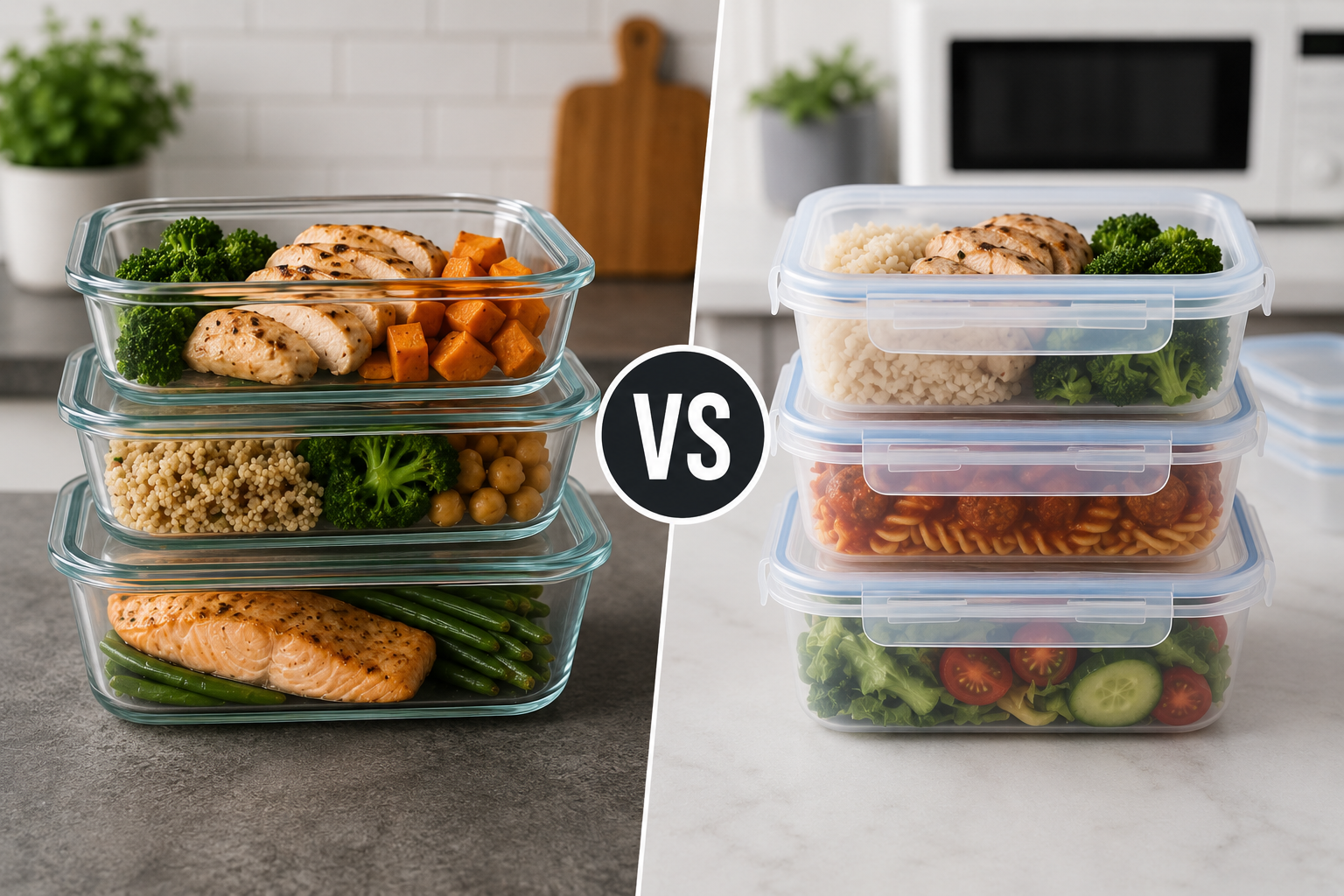
Both glass and plastic food storage containers have advantages and disadvantages. Which one is better usually depends on your daily cooking habits, how you store food, how you transport meals, and how you reheat leftovers. Knowing the strengths of each material makes it easier to choose the most suitable combination.
Why Meal Prep Containers Matter More Than People Think:
Good food preparation containers do much more than just store food. They influence food freshness, ease of use, organisation, hygiene, and even your ability to stick to a regular meal plan.
Leaky, stain-prone, or unstable containers can quickly lead to frustration. Well-sealed containers that fit perfectly in the kitchen, on the other hand, make food preparation much easier.
Moreover, food safety is of the utmost importance. Some materials are more resistant to heating, freezing, and long-term storage. An unsuitable container might not spoil food immediately, but it can affect texture, taste, and shelf life.
When purchasing containers, people often focus primarily on appearance or price, but ultimately, daily ease of use is the most important factor.
The Biggest Advantages of Glass Containers:
Glass containers for food preparation are popular for good reason. They provide a sense of sturdiness, hygiene, and reliability that many plastic containers cannot match. One of the biggest advantages of glass containers is their resistance to stains and odours. Ketchup, curry, garlic dishes, and fatty sauces are less likely to leave a lasting smell or discolouration in glass containers. This benefit is noticeable after just a few months of consistent use.
Glass containers are also ideal for reheating food. Food heats more evenly in the microwave, and you don’t have to worry about the container warping after prolonged heating. Many people, especially those who cook often, prefer to reheat food directly from glass containers.
Another practical advantage is visibility. The fact that you can clearly see the food in the refrigerator, including leftovers, might seem unimportant, but it certainly helps prevent food from being forgotten and wasted.
Personally, I have also noticed that food stored in glass containers tastes fresher when reheated within a week. Crispy vegetables, grains, and proteins retain their texture better than in some old-fashioned plastic containers.
Where Glass Can Become Inconvenient:
Although glass containers offer many advantages, they are not suitable for every household.
The biggest problem is the weight. For commuters or students, lugging around many glass containers in a bag or lunch bag can be quite heavy. Moreover, a small accident in the kitchen on a hard floor can turn into a major problem.
Another problem is space. Glass containers are larger and heavier, causing them to take up more space in kitchen cabinets and refrigerators.
Sometimes the lid is also a weak point. Even high-quality glass containers usually come with plastic lids, which wear out faster than the containers themselves. But after a while, the hassle of constantly having to search for a suitable lid for an unsuitable container becomes quite annoying.
Price is also a factor to consider. Generally, a complete glass cooking system is much more expensive than a plastic system.
Why Plastic Containers Are Still So Popular:
There are valid reasons why plastic lunch boxes last so long. They effectively solve various practical problems.
They are lightweight and portable, making them easier to take along on busy workdays or while travelling. Families who frequently pack lunches for school often choose plastic containers because they are easier for children to grip, and there is no risk of glass breakage.
Plastic containers are also generally cheaper to purchase, making them a practical option for large families or people just starting with meal preparation.
Modern BPA-free plastic containers represent a significant improvement over older models. Many newer plastic containers are more durable, less prone to deformation, and have a better seal than the cheaper plastic containers of the past.
The only thing I still like about plastic containers is that they are easy to freeze. Lightweight containers stack well, and you don’t have to worry about breakage in the freezer or if they accidentally fall.
If you cook large quantities of food at once, storage space can be very valuable. Lightweight containers make weekly meal preparation much easier, both physically and logistically.
The Downsides of Plastic Over Time:
Over time, plastic containers become increasingly brittle, and their defects become more clearly visible.
One of the most common complaints is stains. Stains from food containing turmeric, ketchup, chilli oil, or curry are difficult to remove completely.
Moreover, odours can linger even after cleaning. Containers often retain a faint smell of previous food, especially if they have contained garlic, onions, shellfish, or strongly flavoured foods.
Over time, repeated heating, particularly with lower-quality containers, can cause deformation. Slightly bent lids often lose their seal, leading to leakage during transport.
Another problem is scratches on plastic containers, as the rough surface absorbs grease and odours more easily over time.
Some people prefer not to use plastic containers to heat food, even if the packaging states that they are microwave-safe, because they would rather not reheat it in the microwave repeatedly.
A Simple Side-by-Side Comparison:
For most households, the choice of a container is a trade-off between convenience, durability, and lifestyle.
| Feature | Glass Containers | Plastic Containers |
|---|---|---|
| Weight | Heavy | Lightweight |
| Stain Resistance | Excellent | Moderate |
| Odor Retention | Minimal | Can absorb smells |
| Durability | Long-lasting but breakable | Flexible but can warp |
| Microwave Use | Excellent | Depends on quality |
| Travel Convenience | Less portable | Very portable |
| Cost | Higher upfront | Usually cheaper |
Most experienced cooks use a mix of materials instead of sticking to a single material.
The Best Approach for Real Everyday Use:
After years of research, I am convinced that the best approach is to use a mix of glass and plastic containers for various purposes.
Glass containers are ideal for home cooking, storing food in the refrigerator, reheating leftovers, and storing flavourful dishes or dishes with sauce. Plastic containers are perfect for packing lunch boxes, snacks, organising the fridge, or any situation where portability is important.
Some households even use glass containers for main meals and plastic containers for lunch on the go. This balance ensures the kitchen remains functional without making storage unnecessarily cumbersome.
The shape of the container is almost as important as the material itself. Rectangular, stackable containers optimise space in the fridge and kitchen cabinets better than round containers.
Regardless of the material, choosing a leak-proof lid is crucial. A poorly sealed container is more frustrating than any other problem when preparing food.
How to Make Containers Last Longer:
With proper care, both glass and plastic containers can last a long time.
By adopting a few simple habits, you can prevent common problems:
- Let the heated food cool down slightly before sealing the containers.
- Do not place heavy objects on plastic lids.
- Thoroughly clean the rim of the lid. • Store containers completely dry to prevent lingering odours.
- Replace broken containers immediately.
Something people often forget is placement in the dishwasher. Plastic containers are more susceptible to deformation over time if placed too close to the dishwasher’s heating element.
Glass containers last longer if temperature fluctuations are kept to a minimum. Even the strongest glass can crack if it is placed directly from the freezer into the microwave.
Which Container is Safer?
Both glass containers and high-quality BPA-free plastic containers are safe when used correctly. The main difference lies in their lifespan after repeated heating and prolonged use.
Glass containers are more durable and less susceptible to scratches or damage. They are also better suited for storing acidic foods and for reheating food.
The safety of plastic containers depends on the quality. Cheap containers wear out quickly, while robust, durable, BPA-free containers designed specifically for food preparation generally perform better.
Regardless of the material, damaged containers must be replaced. Deep scratches, bent lids, cracks, or peeling surfaces make cleaning more difficult and reduce the container’s performance.
FAQs
1. Are glass containers for meal prep better than plastic?
Glass containers generally have an advantage when it comes to heating, stain resistance, and lifespan. Plastic containers are lighter, easier to carry, and generally cheaper. The final choice depends on your daily routine and storage needs.
2. Do plastic food containers retain food odours?
Yes, some plastic food containers can retain odours over time, especially from garlic, onions, curry, or tomato-based dishes. High-quality BPA-free plastic is generally more resistant to odours than cheaper plastic.
3. Can glass food containers be frozen and used in the microwave?
Some tempered glass food containers can be frozen and used in the microwave, but drastic temperature fluctuations can cause them to crack. If possible, thaw frozen containers slightly before heating them.
4. Which food containers are the most durable?
Glass food containers are generally more durable because they do not discolour, do not develop odours, and do not deform. However, the lids can scratch more easily than the glass itself.
5. Can food containers go in the dishwasher?
Many food containers are dishwasher safe, but frequent exposure to high temperatures can cause them to deform over time. Placing them on the top rack of the dishwasher can usually extend their lifespan.
Conclusion:
The choice between glass and plastic food containers is less about finding the perfect solution and more about choosing containers that best suit your lifestyle and cooking habits. People who prioritise long-term food storage might opt for sturdy, durable glass containers, while commuters with busy schedules prefer lightweight, portable options.
I have both types in my kitchen. Glass containers are my preference for storing and reheating food in the refrigerator, while plastic containers are handy for travel and quick packed lunches. Once you stop viewing meal preparation as an either-or choice, it becomes much easier to develop a practical and sustainable strategy.

Hannah is a home and kitchen writer who focuses on practical cooking, meal prep, food storage, appliance care, and everyday kitchen organization. She enjoys sharing realistic tips that help make busy home routines feel simpler and less stressful. Through experience-based articles and easy-to-follow advice, Hannah aims to help readers save time, reduce food waste, organize their kitchens more efficiently, and feel more confident managing daily cooking and household tasks.