
Fresh herbs can turn a simple dish into a gourmet marvel. You buy a gorgeous bunch of coriander or a bright bouquet of basil, fully planning to utilise it all week. A few days later you open the crisper drawer to find a slimy, wilted mess. It’s a frustrating experience that wastes food and money. Learning how to store them properly turns this entire dynamic upside down. You can easily add weeks to the life of your greens using a few simple approaches. You will save money, avoid food waste and always have bright flavours at hand for your next home-cooked meal.
Types of Herbs
To preserve your greens effectively, you need to know what type you are working with. Herbs are often classified as either woody or delicate. Woody types feature stiff stems and tough leaves. Think rosemary, thyme, oregano, and sage. These cultivars grow in hot, arid regions and are pretty tough. Tender kinds have soft stems & tender leaves. This comprises basil, cilantro, parsley, and dill. “After they are harvested, they require a lot more cautious handling and certain moisture conditions to survive. The best approach to kill a sensitive herb is to treat it like a woody one.
The Refrigerator Method
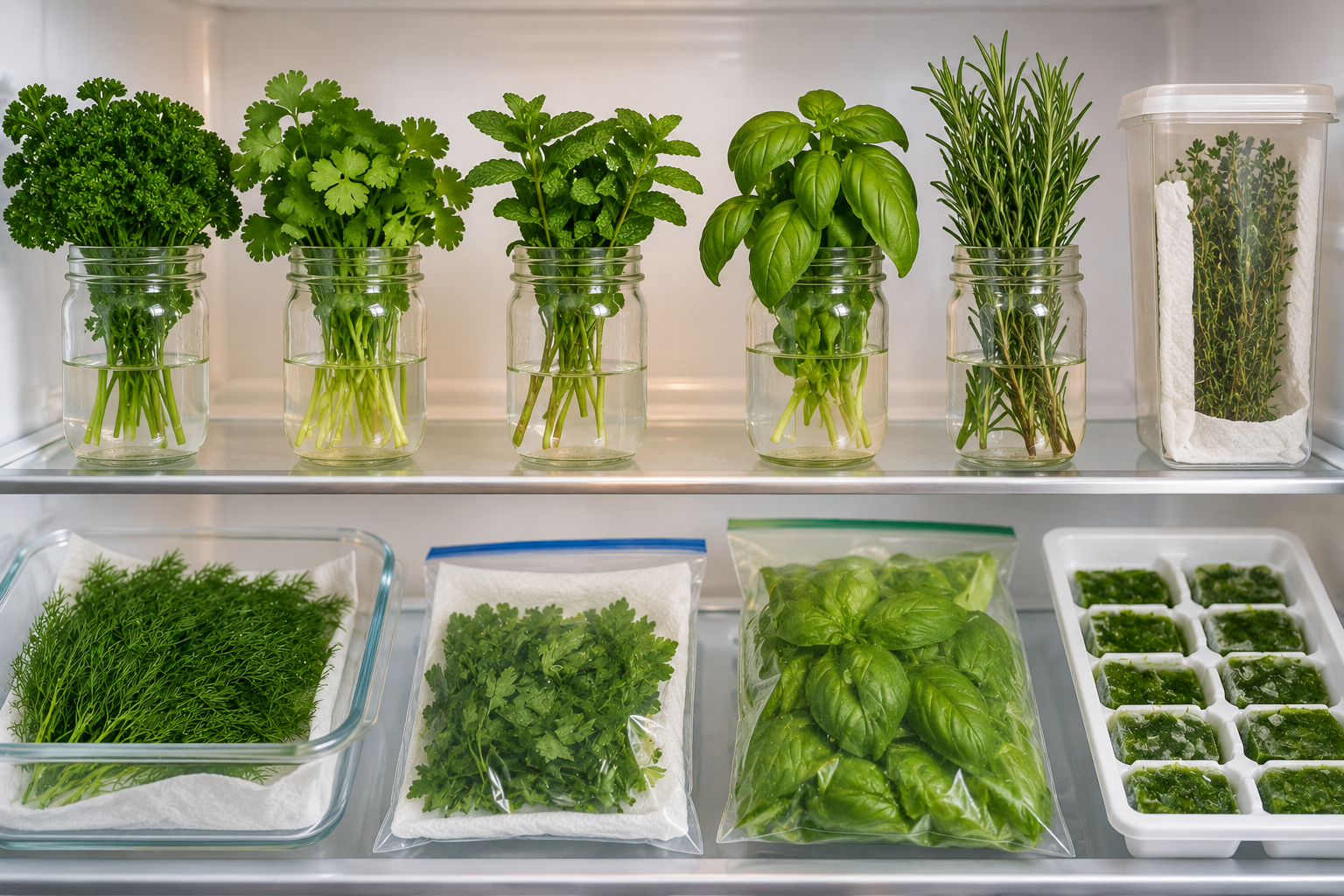
The refrigerator is your best friend when it comes to woody varieties. The cold atmosphere slows down the decay process, and moisture management avoids rot. Begin with a paper towel dampened moderately. You want it just damp, not sopping wet. Loosely wrap the stems and leaves in the moist towel. Put the wrapped package into a resealable plastic bag or airtight container. Leave the bag slightly open to let any excess moisture The crisper drawer protects them from drastic temperature changes in the fridge. spare drawer. This simple procedure will keep your rosemary and thyme fresh for up to three weeks.
The Water Bath Technique
Tender herbs want to be treated like a fresh flower bouquet. To help the stem absorb water, make a fresh cut at the very bottom of each stem. Put an inch or two of cool water in a glass jar or a small cup. Place the stems in the water, but keep the leaves perfectly dry. Leaves that touch the water will decay soon. For parsley and cilantro, cover the tops of the leaves with a loose plastic bag and store the jar in the refrigerator. The only exception to the cold rule is basil. It dislikes the fridge and turns black if chilled. Keep your basil bouquet at room temperature on the kitchen counter.
How to Freeze Herbs
If you have a surplus of greens that you can’t use up fast enough, freezing is a fantastic choice. Cold temperatures keep the vital oils and flavours intact for months. The quickest approach to freezing them is to finely slice the leaves. Pack the cut pieces into the sections of an ice cube tray. Pour neutral oil or water over the top to completely submerge the leaves. Place the tray in the freezer until the cubes are firm. Put the frozen cubes into a freezer-safe bag or container for long-term storage. Stir them straight into soups, stews and sauces as they are cooking.
Herb Drying
One of the oldest methods of food preservation is to remove all the moisture. Drying concentrates the flavour and is an excellent alternative for woody species such as oregano, thyme and rosemary. Gather a small cluster and knot the stems together tightly with string. Hang the bundle upside down in a warm, dry, well-ventilated area. Keep them out of direct sunlight to prevent the breakdown of the essential oils. In a week or two the leaves will snap easily between your fingers. Keep the dried pieces in an airtight glass jar in a cool, dark cupboard.
Oil Infusion
You can capture the essence of your greens in oil to make a versatile ingredient for dressings and marinades. Lightly bruise the leaves to release the natural oils and place them in a clean glass bottle. In a pan on the stove, warm a moderate amount of olive oil, but do not boil it. Pour the warm oil over the leaves to the point when they are completely covered. Leave it at room temperature for one week; close the bottle. Strain the oil to remove the plant material, which can lead to spoiling, ultimately. Store infused oil in the refrigerator, and consume within a month.
How to Troubleshoot Common Herb Storage Problems
Sometimes, you do your best, and things still go awry. If your greens are turning yellow, it’s likely too much sunlight or temperature shock. Black, slimy leaves suggest too much moisture and insufficient air circulation. Always cover your tender kinds with a plastic bag only after they have dried completely. If you see mould, you have to throw the whole bunch away to keep the rest from getting mouldy. Check your stored jars and bags every few days to remove any rotting bits before they spoil the rest of the batch.
Beyond Storage
Storage is just part of the equation. To get the most out of your preserved greens, you need to use them carefully throughout your meal prep. Add tender varieties at the very end of cooking. These oils are fragile and burn off rapidly over high heat, so add them at the last minute to preserve their bright, fresh flavour. Woody varieties demand the opposite strategy. Add rosemary and thyme to the pot early on. Long, slow cooking breaks down their tough texture and allows their strong flavours to fully penetrate the dish.
Keep Your Kitchen Green and Tasty!
Working with fresh materials doesn’t have to be a frustrating process. By learning how to care for the differing needs of woody and sensitive kinds, you can easily retain their colours and tastes. Whether you go for the damp paper towel approach, the countertop water bath or the long-term freezing, you now have the tools to save wasteful waste. As soon as you bring your greens home from the market, begin to give them special treatment. Your meals will be loaded with amazing fresh flavour.
FAQs
1. Why does my basil consistently turn black in the fridge?
Basil is a plant from a warm area and is particularly cold-sensitive. Putting it in the refrigerator will mean the cold kills the cell walls of the leaves, turning them black and mushy. Always keep basil in a glass of water at room temperature.
2. Should I wash my herbs before storing them?
It is advisable to wash your greens just before you want to use them. Excess moisture put in before storage increases the risk of rot and mould. If visibly soiled, wash gently and dry fully with a salad spinner or paper towels before storing.
3. How can I tell if my stored herbs have gone bad?
Rotting greens have a distinctive foul smell. You will also notice sliminess, serious wilting or dark discolouration. If you notice mould anywhere on the bunch, it’s best to toss the whole thing to keep your meal safe.
4. Can I mix different herbs together in the same storage container?
You can technically store them together, but it is normally advisable to keep them separate. Some fruits and vegetables rot faster than others because various types give out differing levels of moisture and ethylene gas. Keeping them in separate containers gives them the longest possible life.
5. How long do frozen herb cubes stay fresh?
Frozen cubes can be kept for up to six months in a sealed, freezer-safe container or bag. It is really handy to just put them in hot food without thawing them out.

Hannah is a home and kitchen writer who focuses on practical cooking, meal prep, food storage, appliance care, and everyday kitchen organization. She enjoys sharing realistic tips that help make busy home routines feel simpler and less stressful. Through experience-based articles and easy-to-follow advice, Hannah aims to help readers save time, reduce food waste, organize their kitchens more efficiently, and feel more confident managing daily cooking and household tasks.