
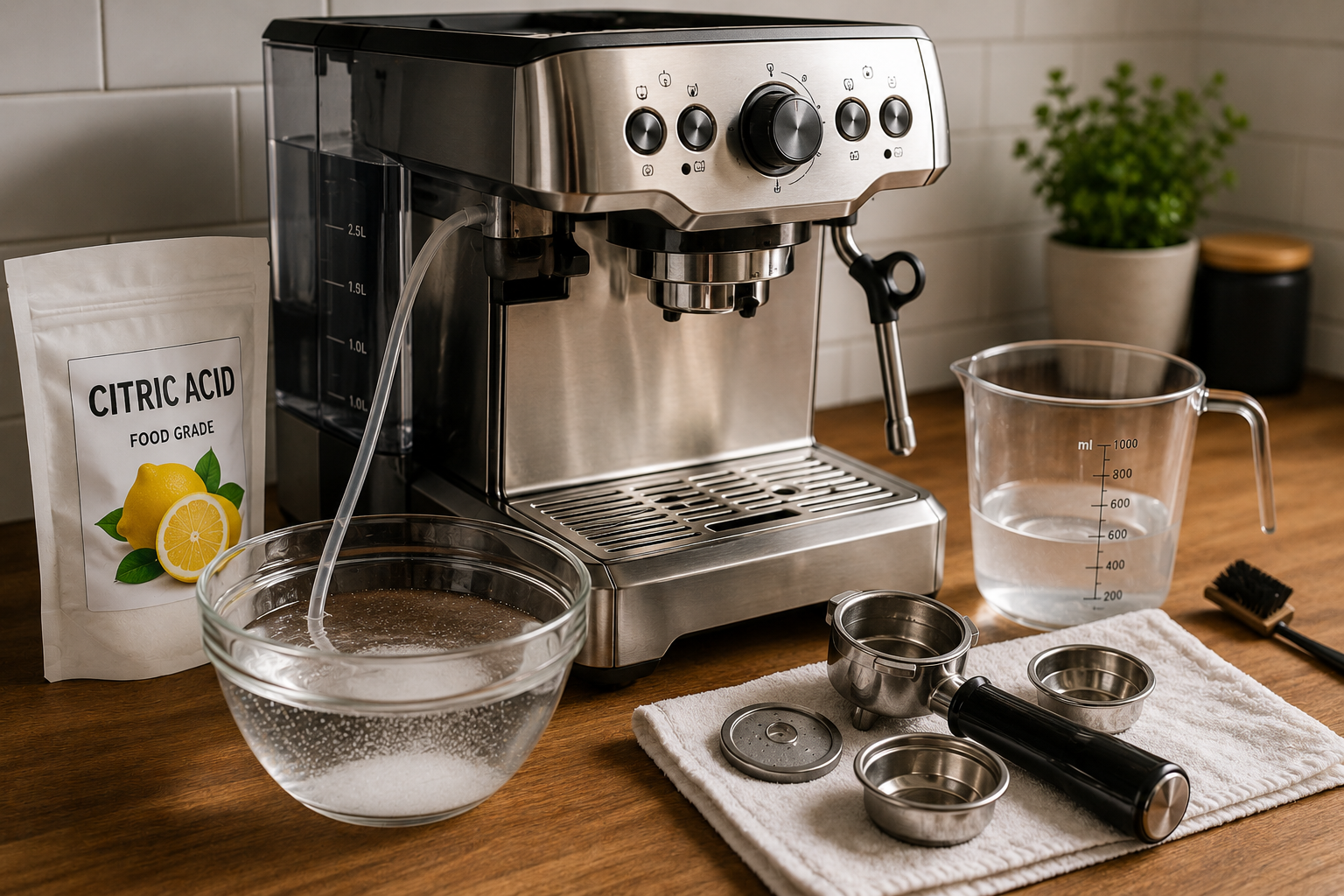
If your espresso has started to taste bitter, weak or strangely sour, it may not be the beans but the machine to blame. In a lot of people’s houses, where the water is hard, mineral building within an espresso machine happens quite gradually, and many people don’t notice it until the machine gets noisy, slow or uneven.
The easiest way to get rid of that accumulation is to clean the machine with some citric acid. It is cheap, easy to obtain and good at getting rid of limescale without the unpleasant chemical smell of some commercial descalers. When used properly, it can help restore water flow, brewing temperature and the life of the machine. It’s not a complicated process, but a few little mistakes can lead to unnecessary wear and tear or leave a bad taste in your mouth. It makes all the difference to be careful.
Why You Should Descale Your Espresso Machine
Every time water is heated in an espresso machine, it leaves behind little mineral deposits. Over weeks and months minerals build up inside the boiler, pipes, valves and steam wand. The build-up may seem innocuous at first. Then it takes longer to brew, steam pressure drops or the espresso shots become unbalanced and watery.
Descaling helps to clear up such deposits before they cause significant difficulties. A clean machine often has better heating efficiency, brews more reliably and makes better-tasting coffee. Water quality also counts. Homes with hard water tend to have more cleaning work to do because of greater mineral content.
Why Many People Use Citric Acid
Citric acid has become a popular home descaling option because it works well without being overly harsh when diluted properly.
Here is a simple comparison:
| Cleaning Option | Main Advantage | Possible Drawback |
|---|---|---|
| Citric acid | Affordable and effective | It must be rinsed thoroughly |
| Commercial descaler | Designed for appliances | Often more expensive |
| Vinegar | Easy to find | Strong odor and lingering taste |
Many espresso machine owners avoid vinegar because the smell can linger inside the machine for days. Citric acid tends to rinse away more cleanly. Still, it is important to check your machine manual first. Some machines with aluminium boilers may require a manufacturer-approved descaler instead.
What You Need Before You Start
Most of the supplies are probably already in your kitchen.
You will need:
- Food-grade citric acid powder
- Warm water
- A large container or bowl
- A microfiber cloth
- Measuring spoons
- Fresh water for rinsing
If your machine uses a water filter cartridge, remove it before descaling. An acidic solution can damage the filter and reduce its effectiveness afterward.
How Much Citric Acid Should You Use?
One of the most common mistakes is making the solution too strong. More acid does not necessarily clean better. For most home espresso machines, a safe mixture is the following:
- 1 tablespoon citric acid per 1 liter of warm water
Warm water helps the powder dissolve completely before it enters the machine. If the machine has not been cleaned in a very long time, it is usually safer to repeat a mild cleaning cycle later rather than use an overly concentrated solution.
Step-by-Step: Cleaning an Espresso Machine With Citric Acid
Turn Off and Cool the Machine
Always start with the machine powered off and cool to the touch. Remove the portafilter, empty the drip tray, and clear out any remaining coffee grounds. If the steam wand has milk residue on it, wipe it down before starting the descaling process.
Fill the Reservoir With the solution.
Mix the citric acid with warm water until fully dissolved, then pour the solution into the water tank. Place a large bowl or pitcher under the group head and steam wand to catch the liquid as it flows through.
Run the cleaning cycle.
If your machine has a descaling mode, use it according to the manufacturer’s instructions.
For manual machines:
- Run water through the brew head for about 20 seconds
- Pause for 20 to 30 seconds
- Repeat several times
- Run some solution through the steam wand as well
The pauses matter because they give the citric acid time to break down mineral deposits inside the machine. You may notice cloudy water or small white particles coming out during the process. That is usually loosened scale being flushed away.
Let the solution sit briefly.
After roughly half the reservoir has passed through the machine, let it rest for about 10 minutes. Avoid leaving citric acid inside for long periods. A short resting period is enough for most home machines. Then continue flushing the remaining solution through the system.
Rinse Thoroughly
This step is extremely important and often rushed. Empty the reservoir completely, rinse it well, and refill it with clean, fresh water. Run at least two full tanks of clean water through the machine.
Make sure to flush:
- The brew head
- Steam wand
- Hot water outlet if your machine has one
If the machine still smells slightly acidic or the first espresso tastes sour afterwards, continue rinsing.
Cleaning the Steam Wand Properly
The steam wand collects both milk residue and mineral buildup, so it deserves extra attention.
After descaling:
- Wipe the outside with a damp cloth
- Purge steam for several seconds
- Check the nozzle holes for blockage
A wooden toothpick can help loosen debris gently, but avoid using metal pins aggressively since they can damage the steam tip.
Common Mistakes to Avoid
A few small errors can make cleaning less effective or harder on the machine over time.
Using Too Much Citric Acid
A stronger solution can increase wear on seals and internal components. Moderate dilution is safer and usually works just as well.
Forgetting to Remove Water Filters
Many built-in filters are not designed to handle acidic cleaning solutions.
Skipping the Steam Wand
Mineral buildup inside the steam system can reduce pressure and affect milk frothing performance.
Not Rinsing Enough
Leftover citric acid can affect espresso flavour noticeably. If coffee tastes sharp or sour after cleaning, the machine probably needs additional rinsing.
How Often Should You Descale an Espresso Machine?
The answer depends mostly on water quality and how often the machine is used.
As a general guide:
- Hard water: every 2 to 3 months
- Filtered water: every 3 to 4 months
- Soft water: every 4 to 6 months
Frequent espresso drinkers may need to descale more often, especially if the steam wand is used daily.
Troubleshooting After Cleaning
Sometimes machines behave differently immediately after descaling. If water flow becomes slower, loosened mineral debris may still be moving through the system. Running extra rinse cycles often solves the problem. If steam pressure remains weak, the steam pathway may still contain scale buildup and could need another mild cleaning cycle later. A sour taste almost always means the machine has not been rinsed thoroughly enough.
Long-Term Maintenance Tips
Keeping an espresso machine clean between descale cycles makes a noticeable difference.
A few simple habits help:
- Empty the drip tray daily
- Rinse the portafilter after each use
- Purge the steam wand immediately after steaming milk
- Use filtered water when possible
- Wipe the machine dry to prevent residue buildup
These small routines reduce heavy scaling and help the machine stay consistent over time.
Final Thoughts
Using citric acid to clean your espresso machine is one of those maintenance procedures that gives you rapid returns. Afterwards, the espresso usually tastes cleaner and more balanced, and the machine is usually quieter and operates more smoothly too.
The trick is to be polite and Mild solutions, careful rinsing, and regular maintenance are much more effective than waiting until scale development becomes serious.scale development is serious. A severely used home espresso machine will brew dependably for years with a little periodic care.
Frequently Asked Questions
1. Can I replace citric acid with vinegar?
You can, however many people don’t, since the scent and taste can stay in the machine. Citric acid usually rinses more cleanly.
2. Does citric acid work with all espresso machines?
Not all the time. Some machines with aluminium parts could need a separate descaling solution. Check the manufacturer’s recommendations before you begin cleaning.
3. How long does it take to descale?
This includes the rinse period, and most home espresso machines take about 30 to 45 minutes in total.
4. Why is my espThis typicallyg sour after cleaning?
This usually means there is still some citric acid residue left in the machine. Flush the system with clean water until the taste goes.
5. Can you ruin an espresso machine by descaling it?
But if it’s done too often, or with too powerful a solution, it can lead to wear on seals and internal parts. With proper dilution and a cleaning routine, difficulties are avoided.

Hannah is a home and kitchen writer who focuses on practical cooking, meal prep, food storage, appliance care, and everyday kitchen organization. She enjoys sharing realistic tips that help make busy home routines feel simpler and less stressful. Through experience-based articles and easy-to-follow advice, Hannah aims to help readers save time, reduce food waste, organize their kitchens more efficiently, and feel more confident managing daily cooking and household tasks.