
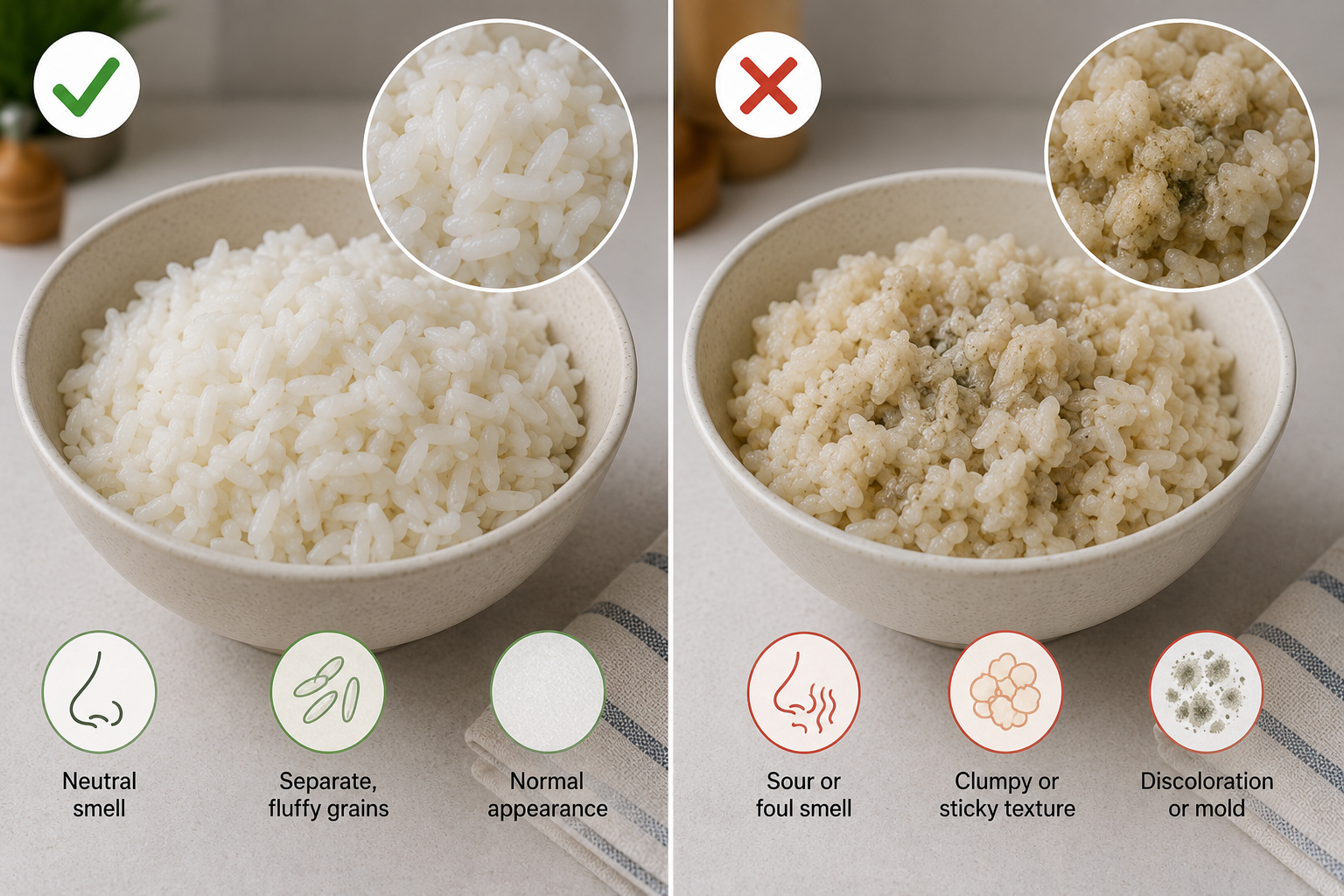
What if the seemingly innocent bowl of grains is actually a science project? It’s important to recognise the signs of spoilt rice. Understanding the shelf life of cooked rice can be crucial when planning your next meal or if you want to avoid wasting food. Learn how to spot spoilt rice so that your meals are safe and delicious!
What are the signs of badly cooked rice?
To avoid unpleasant surprises, it is important to recognise poorly cooked rice. The first sign is a change of colour. It’s time for a toss of your grains, which were once fluffy and light in colour but have now turned dark. The texture can be another clue. If the rice becomes slimy or sticky, it could be a sign of bacteria. Trust your instincts if something feels wrong. NCTs.
Another warning sign is a sour odour. Freshly cooked, mildly scented rice is a reliable indicator of freshness. However, spoilt rice can emit an odour similar to that of fermentation. It’s best not to eat the whole batch if you see any unusual spots or mould on the surface. Safety is always first!
How long can cooked rice be stored?
If stored correctly, cooked rice can be kept for several days. In general, cooked rice can be eaten for up to four days in the fridge. This depends on how you store it. Bacteria can grow if you leave it at room temperature after cooking for longer than two hours.
You can also extend the shelf life of cooked rice by freezing it. It can last up to six months in the freezer. Make sure you store it in an airtight bag or container. Watch the texture and smell, as signs of spoilage can be subtle. If you’re unsure whether your leftover rice is fresh, trust your instincts and be cautious!
The shelf life of cooked Rice
Several factors affect the shelf-life of cooked rice. The temperature is a major factor. Rice stored at room temperatures will spoil faster than rice kept in the fridge. Another important factor is the moisture content. The rice will grow bacteria if it retains too much moisture. You can minimise this risk by cooling the rice properly after cooking.
It is also important to consider the type of rice. The starch content of different varieties like basmati or jasmine can affect the shelf life. The storage containers also affect the freshness. Open bowls and airtight containers expose the rice to contaminants, odours and air. The time since you last cooked also affects safety. The sooner you eat your leftovers, the better they will taste.
How to store cooked rice
Start by letting the cooked rice cool to room temperature. This will prevent condensation that can cause sogginess or spoilage. Transfer the rice to an airtight container once it has cooled. Glass or plastic containers are acceptable; make sure they seal well. Rice should not be left in bowls that are open to the air.
Consider dividing it into smaller portions if you intend to keep the rice for longer than a couple of days. It makes it easier to reheat, and you waste less. The refrigerator is the best place to store cooked rice for a short time, up to four days. To store it for longer, place the rice in freezer-safe containers or bags with as little air as possible. Mark each package with a date to easily track the freshness. Proper storage will not only prolong shelf life but also preserve quality and taste.
How to reheat and use leftover rice
If you do it right, reheating leftover rice is a simple process. Add a splash or two of water to your rice before you heat it. This will help create steam and keep your grains moist. Are you using the microwave? Cover the bowl using a damp towel or lid. This will trap the steam. Stir in between heating bursts to ensure even heat.
If you enjoy cooking your rice on the stovetop, put it in a pan and heat it up. To enhance flavour and moisture, consider adding a small amount of oil or broth. Stir often until heated. Leftover rice is versatile too! Add it to stir-fries or soups. It will enhance your meal. It can be mixed with eggs to create fried rice or used as a filling for wraps and tortillas. It’s a win-win to experiment with meals and minimise waste.
Uses for old or spoilt cooked rice
It’s not necessary to throw away stale or spoilt rice. You can repurpose the rice in many creative ways. You can use it as the base for fried rice. Add some vegetables, eggs and your favourite sauces to make a quick, tasty meal that will mask any minor flavours. You can also transform old rice into delicious rice pudding. You can make a delicious dessert by mixing it with sugar, milk and spices such as cinnamon or vanilla.
Consider using old rice as compost for those who love to garden. It is easy to break down and adds nutrients to the soil. Try making your own veggie burgers with stale beans, stale brown rice and seasonings. Beauty hacks are also important! A rice water made from soaked, stale grains is a great skin or hair toner.
Conclusion
You can protect yourself from health hazards by knowing how to identify spoilt or rotten rice. It is important to pay attention to the appearance, smell, and texture of rice to avoid contamination. The storage of cooked rice is crucial to its longevity. This simple step will prevent waste and allow you to enjoy every mouthful.
Even leftover rice can be used. It’s not necessary to throw away rice that is past its prime. Stale rice, slightly off or a bit spoilt can be given new life by using it in different dishes. Keep up to date with these tips and tricks so that you can get the most from your meals without compromising safety.
FAQs
1. What are the signs my rice is going bad?
If you notice any of these changes, it’s best to throw out the rice. It’s best to throw out the rice if you notice any changes.
2. How long can cooked rice be stored in the refrigerator?
When stored in the fridge, cooked rice can last up to six days.
3. Can I freeze leftover cooked rice?
Yes! Yes! Make sure to let it cool completely before storing it in an airtight container.
4. What should I do when I am unsure if my rice is still edible?
When in doubt, toss it if you’re unsure about your food’s freshness but see no obvious signs of decay.
5. What other uses can you make of stale, spoilt or uncooked rice?
Absolutely! You can compost stale or spoilt rice or add it to homemade pet foods (but make sure that the food is safe for your pets first).

Hannah is a home and kitchen writer who focuses on practical cooking, meal prep, food storage, appliance care, and everyday kitchen organization. She enjoys sharing realistic tips that help make busy home routines feel simpler and less stressful. Through experience-based articles and easy-to-follow advice, Hannah aims to help readers save time, reduce food waste, organize their kitchens more efficiently, and feel more confident managing daily cooking and household tasks.