
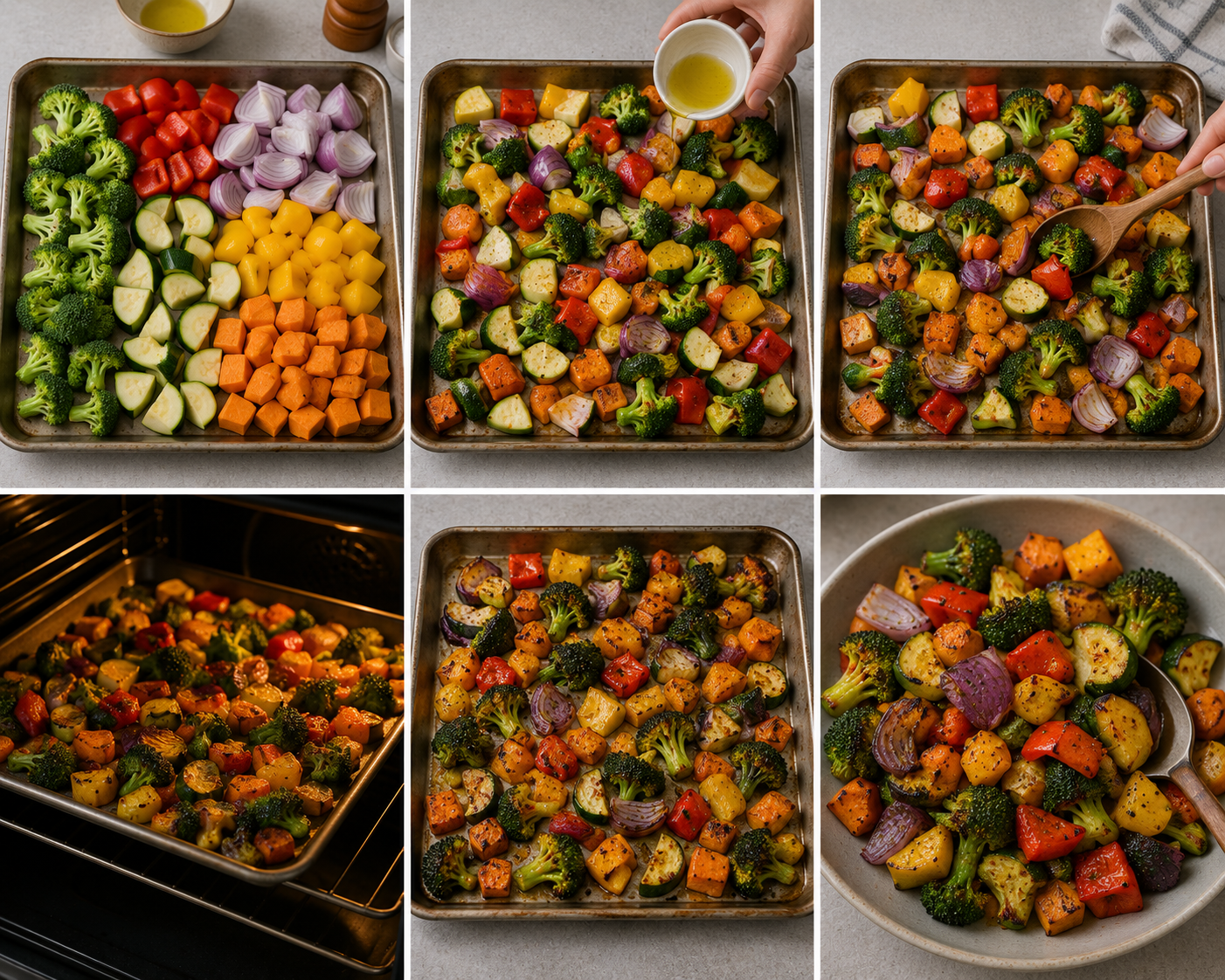
A colourful tray of oven-ready chopped vegetables is one of the most enticing cooking tasks. We imagine caramelised edges, tender innards, and a simple side dish that goes with practically anything. Unfortunately, reality rarely matches dreams. Many home cooks have removed a sheet pan from the oven to find burnt, bitter broccoli florets and rock-hard, undercooked sweet potatoes.
In my years of testing recipes and organising kitchens, I’ve encountered this annoyance many times. It makes people think they need to roast each vegetable in a different pan, which increases dishwashing and oven rack hassles. I assure you that is unnecessary. Once you grasp how veggies react to heat, moisture, and space, you can master the single sheet pan approach. Let’s reveal how to roast evenly every time without unnecessary cleanup.
Why One-Pan Roasting Matters
Achieving a homogenous roast across vegetable types requires more than simply presentation. When vegetables cook at different rates, their texture and flavour change considerably. Overcooked vegetables lose their taste and become bitter or mushy, while undercooked ones maintain a raw crispness that disrupts your meal.
Magic happens in the oven when you get the technique correct. High heat caramelises natural sugars, while moisture inside steams the interior until soft. Cooking your vegetables in one pan lets their subtle flavours and scents blend, making a more unified and tasty dish than if you had cooked them separately. Plus, less cleaning makes cooking fun.
The Common Mistakes That Soak or Burn Veggies
The largest mistake I find in home kitchens is overloading the pan. It’s tempting to arrange all the veggies on one sheet to feed a crowd or finish meal prep quickly. Vegetables are very water-rich. Water evaporates and becomes trapped under the food when piled high. Instead of roasting, your gorgeous vegetables simmer in their juices, leaving them pallid and mushy.
A common mistake is uneven knife work. The principles of physics ensure a culinary disaster if you cut a thick root vegetable into huge chunks and a delicate vegetable into tiny pieces. The size of your slices must match how long the veggie takes to break down under high heat. Finally, many cooks use too little or uneven oil. Oil conducts heat and prevents sticking. Without an even coat, the oven’s dry air will dehydrate the vegetable’s outside layer before the inside cooks, leaving it leathery and unpleasant.
Sorting Vegetables by Density and Moisture Content
To conquer the sheet pan method, you must think like an ingredient specialist. Vegetables can be generally categorised into distinct groups based on how dense they are and how much water they hold. Understanding these groups allows you to make smart decisions about when to add them to the pan or how small to slice them.
| Vegetable Category | Common Examples | Relative Roasting Time at 400°F |
| Hard Root Vegetables | Carrots, Beets, Parsnips, Sweet Potatoes | 35 to 45 Minutes |
| Cruciferous Varieties | Broccoli, Cauliflower, Brussels Sprouts | 25 to 30 Minutes |
| Alliums and All-Rounders | Red Onions, Shallots, Bell Peppers | 20 to 25 Minutes |
| Tender and High-Moisture | Zucchini, asparagus, and Cherry Tomatoes | 15 to 20 Minutes |
Hard root vegetables require the most time because their dense cellular structures take longer to soften. Cruciferous options have a lot of surface area that catches heat quickly, meaning their edges can burn if left in too long, even though their stems need a bit of time to tenderise. Tender, high-moisture vegetables cook incredibly fast because they have very little density to overcome.
The Staged Addition Technique
Adding vegetables in batches is the best strategy to ensure that all ingredients cook at the same time. Instead of putting all the vegetables in the oven at once, add them to a baking dish in batches, depending on their cooking time.
Mix firmer root vegetables with oil and herbs, spread them out in a baking dish, and place it in a preheated oven. Bake for 15 minutes. Meanwhile, prepare vegetables of medium firmness, such as broccoli and onions. After 15 minutes, carefully remove the hot baking dish from the oven, push the root vegetables aside, add the next batch of vegetables, and return the dish to the oven. Repeat this process for ingredients that cook quickly, such as asparagus or cherry tomatoes.
This method requires some patience but prevents an ingredient from burning while you wait for the others to cook. Because the baking dish is already hot, the second and third batches of vegetables are seared immediately, preserving their flavour and texture.
Practical Tips for Golden Brown and Crispy Roasts
I always enjoy sharing a few practical cooking tips to improve your roasting skills.
- Instead of a narrow, dark baking pan, use a thick aluminium baking pan with raised edges. This distributes the heat evenly and prevents the bottom of the food from burning before the top is browned.
- Leave at least 0.6 cm of space between the vegetables so that the hot air can dry them and caramelise the edges.
- Do not drizzle the vegetables with oil; instead, mix them in a large bowl first before placing them in the baking pan. Ensure that every corner is evenly coated with oil.
- Preheat the baking pan before adding the vegetables to kickstart the caramelisation process.
Salting beforehand works well. Salt absorbs moisture from the vegetables, causing them to evaporate faster during baking. If you prefer using fresh herbs or chopped garlic, add them during the last 5-10 minutes of baking. Garlic cloves or fresh parsley can burn and develop a bitter taste if left in a hot oven for 40 minutes.
On Oven Safety and Maintenance
Extra caution is required when baking at high temperatures, both for kitchen safety and for the efficient operation of the oven. Oil stains on the bottom of the oven or the edge of the baking tray cause smoke when baking at high temperatures of 200°C or 220°C. Keep the oven clean to prevent the smoke alarm from going off and to prevent fresh food from emitting a pungent, smoky odour.
Carefully remove the hot baking tray from the oven to place the next batch of vegetables on it. Vegetables with a high moisture content will steam immediately upon contact with the hot baking tray. Use dry, sturdy oven mitts, and keep your face away from the baking tray to handle it safely. Never use a wet cloth to handle a hot baking tray – the high temperature will quickly turn the moisture into steam, which can cause serious burns.
Kitchen Tip
Mastering cooking techniques on a single baking sheet is undoubtedly a revolutionary skill for home cooks who want to simplify their cooking process without compromising on quality. This strategy is based on the physics of the kitchen: making optimal use of space, controlling moisture, and monitoring the cooking time of ingredients.
When you open the vegetable drawer and find various types of vegetables, you don’t have to worry about using multiple baking sheets or spending a lot of time. Use a large bowl, carefully chop the ingredients, and then place them in the bowl step by step to easily create delicious and harmonious side dishes. With a little effort, this tried-and-tested method adds fun to cooking, enticing aromas, and a caramelised flavour to your daily meals.
FAQs
1. Why do my roasted vegetables always turn mushy instead of crispy?
Mushy vegetables are usually caused by too many vegetables on the baking sheet or too much oil on the vegetables. Vegetables packed closely together trap steam, causing them to cook instead of roast. Divide the vegetables into two portions and place them on two separate baking sheets, or use less oil.
2. Should I use parchment paper or aluminium foil on the baking sheet?
Aluminium baking sheets retain heat better, so baking directly on a good aluminium baking sheet ensures better caramelisation of the vegetables. Parchment paper works well at temperatures up to 220°C and is easier to clean. Thick aluminium foil can also be used, but it must be greased to prevent vegetables with skins from sticking together.
3. Can I roast frozen vegetables on one baking sheet?
Yes, but you need to adjust your method. Never thaw frozen vegetables before baking; they will become mushy. The correct method is to place fully frozen vegetables in oil, then place them on a prepared baking sheet and bake at 220 to 230 °C (425 to 450 °F) to allow the ice on the surface to evaporate quickly.
4. Which oil is best for high-temperature roasting vegetables?
Choose an oil with a high smoke point that can withstand temperatures of 204 to 232 °C (400 to 450 °F) without burning. Avocado oil, canola oil, and refined olive oil are all good choices. Avoid using extra virgin olive oil for high-temperature roasting, as its low smoke point causes it to burn quickly and impart a bad taste.
5. How do you know if roasted vegetables are done?
They are done when you can easily pierce the centre of the vegetable with a sharp peeler or fork. Caramelisation is complete when the bottom and edges of the vegetable are deep golden brown or dark brown.

Hannah is a home and kitchen writer who focuses on practical cooking, meal prep, food storage, appliance care, and everyday kitchen organization. She enjoys sharing realistic tips that help make busy home routines feel simpler and less stressful. Through experience-based articles and easy-to-follow advice, Hannah aims to help readers save time, reduce food waste, organize their kitchens more efficiently, and feel more confident managing daily cooking and household tasks.