You’re facing a culinary dilemma. You stare at your chef’s and bread knives, not knowing which to choose. You are not alone. Both tools are important in the kitchen, but they have different functions that can help you improve your cooking.
Imagine yourself slicing a loaf of freshly baked crusty bread, or finely chopping the ingredients for a tasty stir-fry. It can make the difference between completing a simple task and facing frustration. Understanding the features and functions of every knife is essential to mastering bread, as well as countless other dishes. We’ll cover each knife’s details so you can choose the best one!
What’s the difference between a bread knife and a chef’s knife?
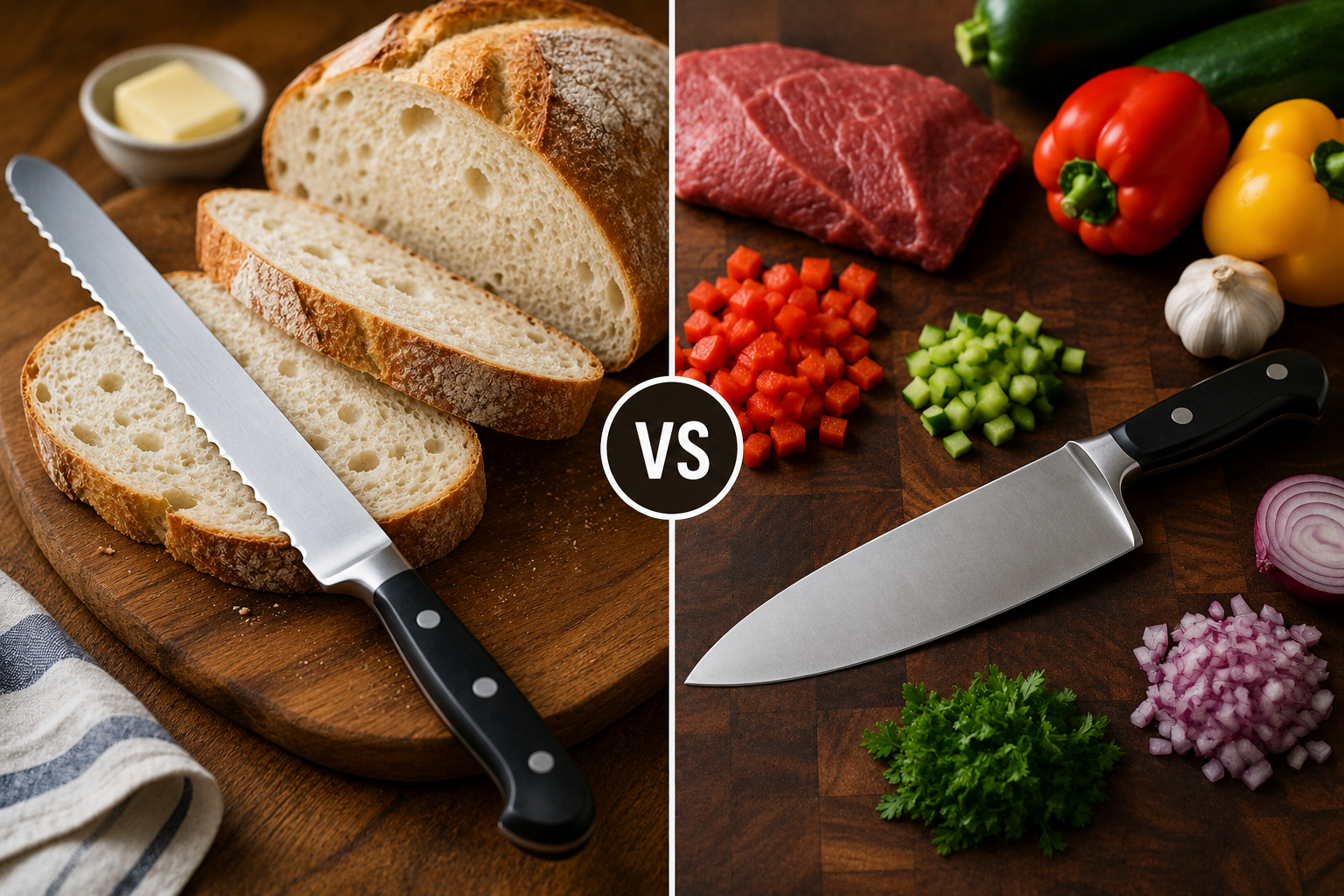
Chef’s knives and bread knives are designed to perform different tasks in the kitchen. The serrated blade of a bread knife allows it to slice through tough crusts without damaging the interior. The blade’s teeth grip the bread and allow you to cut easily. A chef’s blade, on the other hand, has a smooth, versatile edge that is ideal for mincing, dicing and chopping various ingredients. The tapered shape allows for precise control when preparing food.
The length of the knives also varies. Most bread knives are longer than chefs’ knives in order to accommodate larger loaves. The difference in length enhances the effectiveness of each knife when it comes to handling certain foods. Material differences matter too. Bread knives are often made of softer steel, which is easier to sharpen while still maintaining the serrations. Chef’s knives are usually made of harder steel to ensure durability and edge retention. Knowing these differences will help you choose the best tool for preparing meals.
How to use a Bread Knife
When it comes to cutting through crusty bread, a bread knife is the tool of choice. The serrated edge cuts through tough exteriors quickly, without crushing the interior. Fresh baguettes and artisan sourdough are great examples. The teeth are sharp and grab the bread, cutting it into uniform slices.
This knife is not just for bread. It also shines in baked goods such as cakes and pastries. The knife glides effortlessly through layers of fluffy meringue or sponge cake. A bread knife is perfect for those who like to make homemade sandwiches. It can cut even pieces, which are ideal for stacking the fillings. Nobody wants a sandwich that is squished! Remember, it’s great for desserts and bread but not for vegetables. Other knives are better suited for these tasks.
How to use a Chef’s Knife
The chef’s blade is the tool of choice for many kitchen tasks. This knife is versatile and can be used to cut a wide range of ingredients from meats to veggies. This knife is excellent for dicing or chopping tomatoes and onions. The sharp edge of this knife makes it effortless to cut through both tough skin and soft flesh. A chef’s blade is also useful for cutting herbs. The wide blade makes it effortless to rock the knife, which ensures a finely chopped result every time.
The weight and balance of the chef’s knives will help you control your carving of larger cuts of tougher meat. This type of knife is perfect for creating uniform pieces, such as julienned carrots or cubed potatoes. The versatility of this knife makes it a must-have in any kitchen. The chef’s knives are a great tool to have in the kitchen, whether you’re preparing a simple meal or an elaborate one.
Use each knife for a different task.
Bread knives are excellent for cutting through crusty loaves without crushing the interior. They are ideal for baking because their serrated edges cut and grip. They can be difficult to use for other tasks, such as chopping meats or vegetables. Chef’s knives, on the other hand, are extremely versatile. The knives are capable of handling everything from chopping onions to mincing garlic. Straight edges allow for clean and precise cuts.
But using a knife to cut bread can be frustrating. It may not slice smoothly if it does not have a serrated blade. The choice between the two is often based on your cooking style. A bread knife is a must-have if you bake often. A skilled chef’s blade might be better for general meal preparation. Each knife has strengths and weaknesses that suit specific tasks in the kitchen.
How to choose the best knife for you
Understanding your cooking style is the first step in choosing the right knife. Do you frequently cut vegetables or bread? Size and weight are important factors to consider. Lighter models are more agile and can handle delicate tasks better. It is also important to consider the handle. To prevent fatigue, choose a grip that feels comfortable in your hand.
Please remember the blade material! High-carbon steel is sharper but more difficult to maintain. Hold each knife in your hand before purchasing. This tactile experience will help you make a decision. Consider versatility over specialisation. If you cook various dishes, it might be worth investing in a good chef’s blade and a bread knife for your culinary adventures.
Conclusion
A bread knife and chef’s knives in your kitchen will open up an entire world of culinary options. Each tool has its own purpose and makes food preparation easier. The bread knife is excellent at cutting through crusty loaves without crushing their soft interiors. The serrated edge of the bread knife glides easily through baked goods to ensure that each slice is perfect.
The chef’s knives are versatile and essential for cutting meat, herbs or vegetables. The sharp blade makes it effortless to make precise cuts for quick meal preparation. By investing in these knives, you can tackle various cooking tasks easily. The right tools will make a huge difference to your cooking experience, whether you are preparing a breakfast toast or a dinner feast.
FAQs
1. Can I cut bread with a chef’s blade?
A chef’s blade slices soft bread but does not work as well on crusty loaves.
2. Do I need both types of knives?
Yes! Both are useful for various preparation tasks. Each excels in areas where the other fails.
3. How should I maintain my knives?
Sharpen your blades regularly using honing rods or whetstones. Wash them by hand rather than putting them in the dishwasher to ensure longevity.

Hannah is a home and kitchen writer who focuses on practical cooking, meal prep, food storage, appliance care, and everyday kitchen organization. She enjoys sharing realistic tips that help make busy home routines feel simpler and less stressful. Through experience-based articles and easy-to-follow advice, Hannah aims to help readers save time, reduce food waste, organize their kitchens more efficiently, and feel more confident managing daily cooking and household tasks.