
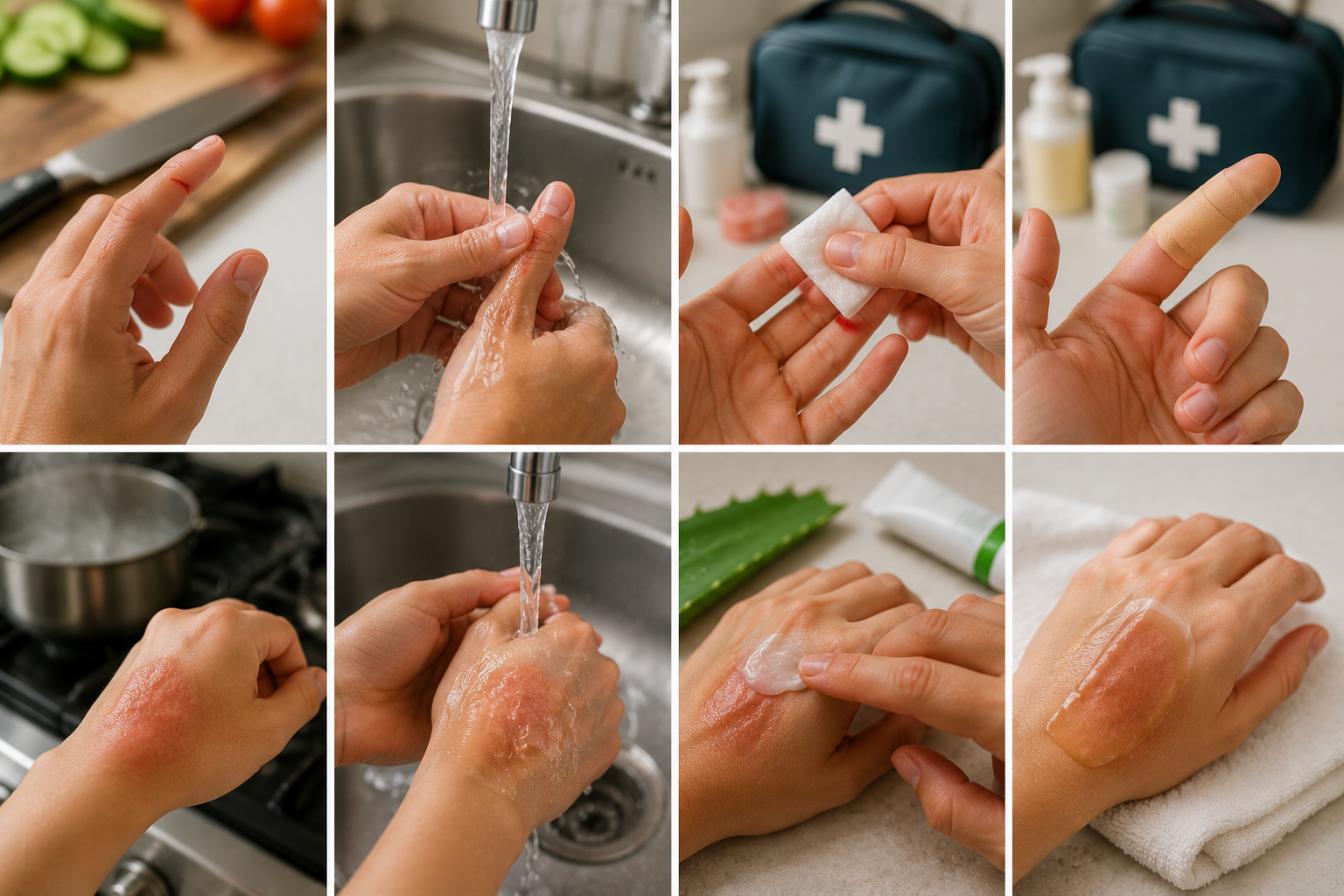
The kitchen is one of the busiest rooms in any home. All kinds of activities take place there, such as chopping vegetables, pouring hot drinks, using sharp objects, and heating pans. These activities can easily lead to minor accidents. Whether you are a novice or an experienced cook, you can sustain minor cuts and burns. These injuries are usually not serious, but they can be painful, unsettling, and confusing at the time. Many people panic because they do not know what to do or fear worsening the situation by acting incorrectly.
Understanding how these injuries occur is the first step to staying calm and reacting correctly. In daily life, injuries can be simple, such as a knife slipping while chopping onions, accidentally hitting a hot pan, or spilling boiling water while draining noodles. These minor accidents can be frightening, especially if you are cooking alone. Knowing the right procedures can help you stay confident, handle the situation safely, and prevent minor injuries from escalating into major problems.
Stay Calm and Assess the Situation First
When you cut or burn yourself, your first reaction is likely fear. Your heart races, your thoughts become confused, and you may not know what to do. Staying calm is crucial, because your reaction in the first few minutes can have a major impact. Take a deep breath. This helps you concentrate and avoid making hasty judgements.
First, stop what you are doing and move away from the source of the injury. If you are cooking, turn off the stove or move hot objects to prevent further accidents. Examine the wound carefully to determine if it is harmless. Small cuts, superficial abrasions, or minor burns—if they are only red—can usually be treated at home. If the wound looks deep or severe or worsens, it is advisable to seek professional medical help. A quick assessment at this stage helps you stay calm and not let your emotions take over. Once you have determined that the wound is harmless, you can begin proper care.
Treatment of Minor Cuts in the Kitchen
One of the most common accidents in the kitchen is a minor cut. These usually occur while cutting vegetables, opening packaging, or using sharp objects. The first thing you should do is stop the bleeding. Gently press on the wound for a few minutes with a clean cloth or paper towel. Most minor cuts stop bleeding quickly when pressure is applied.
After the bleeding has stopped, gently rinse the wound with clean running water. This helps to remove any dirt, food residue, or bacteria that may have entered the wound. Do not use water that is too hot, as excessive heat can irritate the skin. Dry the wound with a clean towel after washing. By bandaging the wound, you prevent it from coming into contact with food, water, or other surfaces. Covering the wound also reduces the risk of irritation during daily activities. These simple steps help minimise pain and keep the wound clean, which promotes natural healing.
First Aid for Minor Burns
Contact with hot pans, oil splatters, and steam are common causes of burns in the kitchen. The first and most important step is to cool the burnt area quickly. Rinse the area with cold water for a few minutes. This helps to cool the skin and relieve irritation.
Avoid applying ice directly to the burnt area, as this can irritate the skin and worsen the pain. The best and safest method is to cool the area with water. After the burnt area has cooled, gently pat it dry with a towel; do not massage the area. If the skin is red and slightly painful, the condition is usually a minor burn that will heal with simple care. Keeping the burn clean and covered prevents further irritation and allows the skin to heal comfortably.
The Importance of Hygiene in Preventing Complications
Keeping the burn clean is essential after a cut or burn. The kitchen environment contains food residue, moisture, and surfaces that may harbour bacteria. Cleaning the wound helps prevent further problems and promotes faster healing.
If you need to touch the wound again, especially when bandaging or checking it, always wash your hands first. Replace the bandage regularly and keep the wound as dry as possible. Loose, breathable bandages help protect the sensitive skin around the burn from friction and accidental touching. This seemingly simple habit is crucial for hygiene, minimises irritation, and ensures proper wound healing. Over time, these small daily care practices can yield significant benefits.
Knowing When to Rest and When to Stop Cooking
A common mistake is to continue cooking immediately after an accident. You may be tempted to finish quickly, but resting is a better option. Continuing to cook with your injured hand can worsen the pain and slow down healing.
Rest promotes recovery and prevents new injuries. Short breaks also give you time to ensure the wound is properly covered and cared for. Only return to the kitchen when you feel comfortable and safe to prevent a new accident. Rest is not a sign of weakness but a wise choice for your safety and recovery.
Simple Ways to Naturally Relieve Pain and Discomfort
Minor wounds and burns can often be painful, especially in the first few hours. Fortunately, there are a number of simple daily habits that can help naturally relieve the discomfort. It is crucial to avoid friction, high temperatures, or pressure on the injured area.
Ensure your body is comfortable. Drink plenty of water and rest your hands as much as possible. Avoid direct sunlight or high temperatures on the burnt area, as this can increase sensitivity. For cuts, avoid any movement that could reopen the wound. Small adjustments to your daily routine can help you stay comfortable while the wound heals. Most minor wounds heal quickly with proper care. And be patient.
Lack of Experience and Learning from Mistakes
In the kitchen, every small accident can be a valuable lesson. Think about what caused the accident and how you can prevent a recurrence. Perhaps the knife wasn’t sharp enough, the cutting board slipped, or you grabbed a hot pan without oven mitts.
Small adjustments, such as using a sturdy cutting board, keeping knives sharp, or wearing protective gloves when handling hot pans, can significantly reduce the risk. Over time, you develop safer habits, making you feel more comfortable and confident while cooking. Learning from small mistakes increases your safety awareness and minimises the chance of the same accident happening again.
Developing Safer Kitchen Habits
Safer cooking habits do not require drastic changes. Small habits, if applied consistently, can have a big impact. The key to safety is staying organised, avoiding distractions while cooking, and using the right tools correctly.
Staying calm and focused is an effective way to prevent accidents. Moreover, the best way to prevent accidents is to prepare ingredients and keep hot food in a visible place. Developing safe kitchen habits makes cooking a breeze. Over time, these habits become second nature, making your kitchen a more comfortable and pleasant workplace.
Summary
Minor cuts and burns are inevitable in the kitchen, but knowing how to handle them calmly and correctly is crucial. These minor accidents can be safely treated at home if you clean the wound properly, protect the affected area, and give it rest. By learning from every experience and developing safer kitchen habits, you can prevent future accidents and cook with more confidence. Even unexpected minor incidents can offer opportunities to raise awareness of kitchen safety if you adopt the right attitude.
Frequently Asked Questions
1. How long does it take for a minor cut in the kitchen to heal?
Most minor cuts begin to heal within a few days and are usually fully healed within one to two weeks if kept clean and protected. You have been burnt and are unsure whether or not to bandage the wound.
2. Can I continue cooking with a small cut on my hand?
Yes, but only if the wound is cleaned and properly bandaged first. First of all, take a rest.
3. How can you prevent minor accidents in the kitchen in the future?
Using appropriate kitchen utensils, staying focused, and having a clean and tidy workspace can effectively prevent most accidents.

Hannah is a home and kitchen writer who focuses on practical cooking, meal prep, food storage, appliance care, and everyday kitchen organization. She enjoys sharing realistic tips that help make busy home routines feel simpler and less stressful. Through experience-based articles and easy-to-follow advice, Hannah aims to help readers save time, reduce food waste, organize their kitchens more efficiently, and feel more confident managing daily cooking and household tasks.