
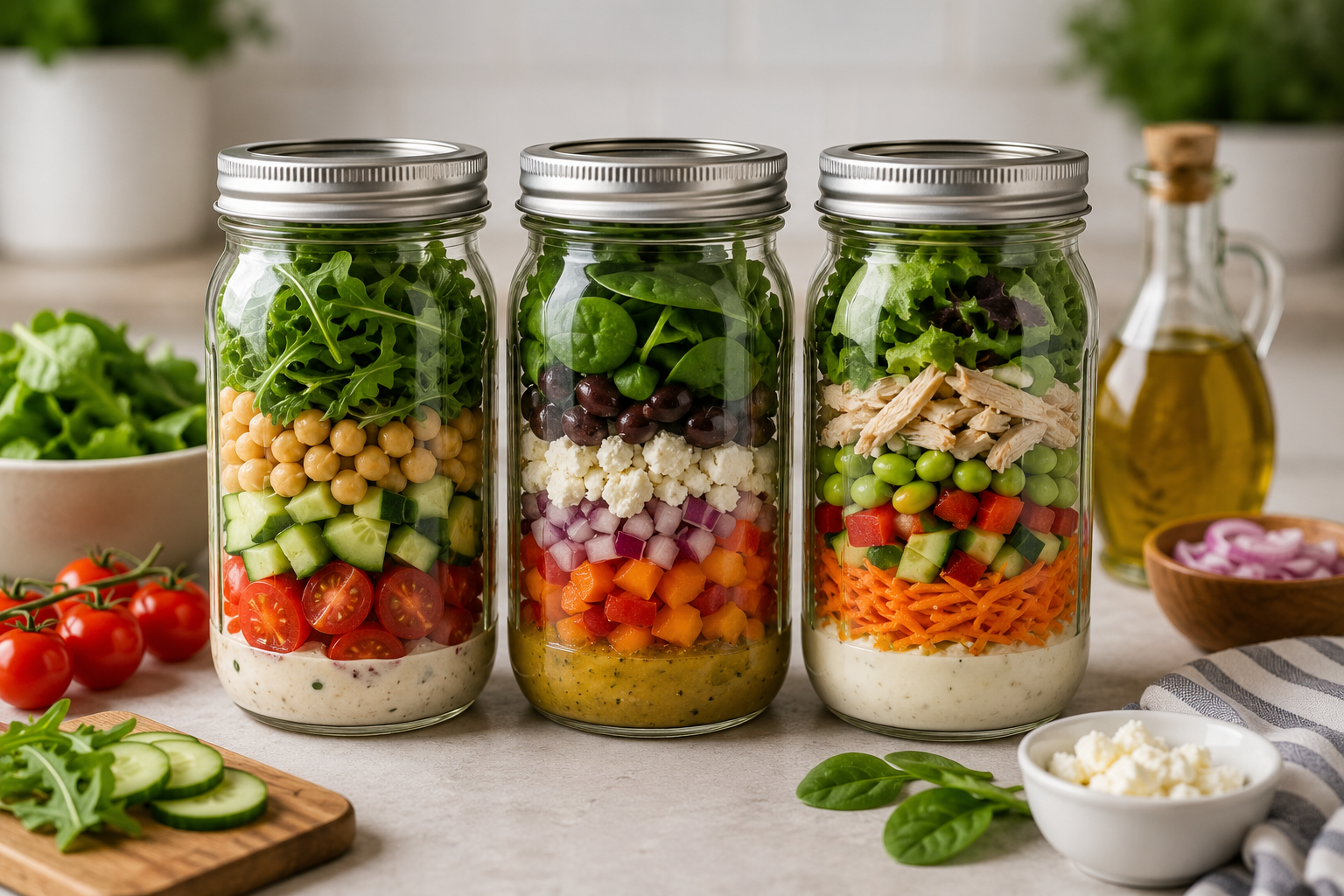
Preparing meals in advance sounds great, but it is a completely unique feeling when you open the fridge halfway through the week and find the salad mushy, the lettuce wilted, the cucumbers soft, and the dressing sunk to the bottom. It is this frustrating situation that has made salads in preserving jars so popular. If you layer them the right way, they stay crisp, fresh, and surprisingly tasty for days.
I started making salads in preserving jars when I was incredibly busy with work and ordering takeout every afternoon was both expensive and boring. Initially, I made the mistake most people make: mindlessly throwing everything into the jar, assuming it would stay fresh that way. The result? The vegetables were shrivelled and tasted terrible the next day. But once I found the right way to arrange them in layers, salads in preserving jars became one of the easiest lunches to make.
The secret lies not only in the preserving jar itself. The key is understanding moisture levels, knowing how to arrange ingredients, and knowing how different plants change over time.
Why Salads in Mason Jars Work So Well:
Preserving jars keep moist, perishable ingredients hermetically sealed. This separation ensures the lettuce stays crisp and the toppings fresh for days, rather than just a few hours.
Pre-seasoning vegetables is a major cause of traditional bento boxes failing. Even the most durable lettuce starts to rot if kept in a damp environment for too long. The advantage of preserving jars is that you place the heavier, wetter ingredients at the bottom, protecting the lighter vegetables on top.
The airtight lids also keep food fresh longer than many fragile plastic containers. Glass jars do not retain odours, discolouration, or moisture like some other containers do.
Salads in preserving jars are a fantastic option for easy, healthy meals during busy periods. All ingredients are already portioned and ready to eat – you just need to take them out of the fridge.
Choosing the Right Jar Size:
The size of the jar is more important than most people think. A jar that is too small will crush the ingredients, especially delicate vegetables. Containers that are too large leave too much space between the ingredients, causing them to mix prematurely.
Generally, a one-litre (approximately 950 ml) Mason jar with a wide opening is most suitable for a main course salad. These jars offer enough space to layer the ingredients and fit in most refrigerators.
For side dishes or ingredients you prepare in advance, smaller half-litre (approximately 473 ml) jars are more suitable. Some people prefer half-gallon (approximately 1.9 litre) jars for lunch salads, but these are heavier and less convenient to move.
Jars with a wide opening are particularly easy to stack and eat from. Jars with a narrow opening may be photogenic, but they are harder to fill and less convenient for lunch.
The Correct Layering Order Makes All the Difference:
The order of the ingredients determines whether a salad stays fresh and crisp for five days or even a night. Once you get used to this method, it becomes automatic.
Always place the salad dressing and other moist ingredients at the bottom. This protects the vegetables from moisture for as long as possible.
Next, create a protective layer with sturdier vegetables. Ingredients such as cucumbers, carrots, celery, bell peppers, and chickpeas are moisture-resistant and help prevent the dressing from soaking into the more delicate layers.
Next come the proteins and grains. You can place chicken, beans, quinoa, pasta, or hard-boiled eggs in the middle; these are less sensitive to moisture than leafy greens.
The top layer should always be reserved for lettuce, spinach, arugula, or mixed vegetables. Place the dressing in the furthest corner, away from these vegetables, to preserve texture and freshness.
Thoroughly drying vegetables before packaging is a crucial habit. Even a small amount of residual moisture after washing can significantly shorten the shelf life of the salad.
Ingredients That Stay Fresh the Longest:
Not all salad ingredients are suitable for storage in glass jars. Some vegetables remain crisp for several days, while others release moisture quickly.
Generally, romaine lettuce keeps longer than mixed lettuce or butter lettuce. Shredded cabbage and kale have a very long shelf life and often taste even better after a day or two.
Crunchy vegetables such as carrots, radishes, broccoli, and sugar snap peas also keep well. Grains like quinoa and farro are a good addition because they absorb flavour and do not become mushy.
Some ingredients are best added just before serving. Avocados discolour quickly, croutons lose their crispness, and soft fruits like strawberries release moisture if stored for too long.
Here is a simple ingredient list to help you prepare your salads in advance:
| Ingredient Type | Usually Stays Fresh Longer | Best Added Later |
|---|---|---|
| Greens | Romaine, kale, cabbage | Spring mix |
| Vegetables | Carrots, peppers, broccoli | Tomatoes |
| Toppings | Chickpeas, quinoa, nuts | Croutons |
| Fruits | Apples, grapes | Berries, avocado |
Most people gradually discover their favourite salad combinations based on which ingredients in their fridge can be stored best.
How Long Do Salads in Mason Jars Last?
Most salads in preserving jars, if properly assembled, will keep for about four to five days in the fridge. Some richer combinations last longer, especially those with kale or cabbage, grains, or beans.
Salads and seafood, especially those with soft leafy greens or sliced fruit, spoil faster. It is best to determine the shelf life of your salad based on the most perishable ingredients in the jar.
A consistent temperature is also important. If your fridge is always open or too warm, the freshness of your food can decrease significantly. Salads are best stored at the back of the refrigerator, where the temperature is more stable.
Years of cooking experience have taught me that freshness isn’t just about food safety; taste is crucial too. Theoretically, you can still eat a salad after a few days, but most people won’t enjoy it if the vegetables are mushy and too watery.
Common Mistakes That Ruin Mason Jar Salads:
The biggest mistake is using wet ingredients without drying them first. Excess moisture from washed lettuce, cucumber slices, or herbs can seep into the jar and soften the surrounding ingredients.
Another common problem is overfilling the jar. If the ingredients are packed too closely together, the vegetables get crushed, reducing the amount of air entering the jar and causing the texture to change over time.
Food stored at high temperatures also requires attention. If you put cooked chicken, grains, or roasted vegetables in a jar while they are still hot, condensation will form. This trapped moisture will quickly affect the freshness of the food.
Some people think that all salad ingredients must be stored in a jar, but some toppings are better kept separately. It is best to add nuts, seeds, tortilla chips, and crunchy ingredients last to keep them fresh longer.
The amount of dressing you use is also important. No matter how evenly the ingredients are distributed, too much dressing can always seep up.
How Do You Enjoy Salad in a Preserving Jar?
There are two easy ways to eat salad in a preserving jar. Some people shake the jar vigorously and eat the salad straight from it, especially if the jar is wide.
Personally, I prefer to pour the salad into a bowl. This distributes the ingredients more evenly and keeps the vegetables airier rather than compressed. It also makes it easier to add other toppings or adjust the flavour. If the dressing tends to sink to the bottom of the jar, turn the jar upside down for a minute before opening it so that the dressing is distributed more evenly when poured.
Salad in a preserving jar is also perfect to take to work for lunch, on road trips, or on picnics because the airtight jar prevents leakage and keeps the salad fresh during transport.
How to Clean and Maintain Preserving Jars:
Good storage methods are just as important as stacking the ingredients correctly. Always clean the preserving jars thoroughly after each use, paying particular attention to the rim of the lid, as sauce residue can easily remain there.
If the jars are sealed while the food is still steaming, a strong garlic or onion sauce smell may sometimes linger. Allow the jars to air dry completely before storing the lids to prevent musty odours.
Check the lids regularly for corrosion or damaged seals. Old lids can sometimes lose their seal, causing the freshness of the food to decrease over time.
Many cooks who prepare meals for longer periods use multiple identical preserving jars because uniform jars are easy to stack, store, and organise.
FAQs:
How long do salads in preserving jars stay good?
Salads in preserving jars, provided they are kept refrigerated immediately, remain fresh for about 4 to 5 days. Nutritious leafy greens and hearty vegetables are usually the salads that keep the longest.
What goes at the bottom of a mason jar salad?
Always put the dressing at the bottom. Then add some hearty vegetables and protein as a base and cover with leafy greens to keep them crisp.
Can you put lettuce directly in mason jars?
Yes, but place the lettuce on top of the jar, away from moisture. By drying leafy greens well before putting them in the jar, they stay fresh longer.
Are salads in preserving jars really worth it?
Yes, for many people. They make meal planning easier, reduce food waste, and make preparing nutritious lunches simpler during busy weeks. Once you get used to the layering method, you can make it quickly and easily.
Can I freeze salads in preserving jars?
Freezing is not a wise idea. No. Most types of lettuce become mushy after thawing, and glass jars can crack if not frozen properly.
Conclusion:
The best use of salads in preserving jars is not just as a trend but as a smart kitchen system. With a little attention to the layers, humidity levels, and ingredient selection, salads can stay fresh for up to a week.
Once you know how to make them, they become one of the easiest ways to enjoy delicious, ready-to-eat meals from the fridge at any time, without compromising on taste. Even after years of making lunches, I still enjoy the satisfaction of opening the fridge and finding a colourful, fresh, and crispy ready-to-eat lunch.

Hannah is a home and kitchen writer who focuses on practical cooking, meal prep, food storage, appliance care, and everyday kitchen organization. She enjoys sharing realistic tips that help make busy home routines feel simpler and less stressful. Through experience-based articles and easy-to-follow advice, Hannah aims to help readers save time, reduce food waste, organize their kitchens more efficiently, and feel more confident managing daily cooking and household tasks.