Although heavy cookware is indispensable in every kitchen, storing it daily can be a hassle. Many people have dealt with broken shelves, sagging cabinets, and cooking scratches. If you have ever heard a loud bang when opening a cabinet or seen shelves bent and warped by the weight of items, you know that your kitchen storage is definitely an issue. The good news is, with the right methods, you can safely store heavy cookware without damaging your cabinets, keeping your kitchen clean and user-friendly. This guide leads you step-by-step through the process of solving this common kitchen storage problem.
Why Heavy Cookware Damages Cabinets
Most kitchen cabinets are designed for everyday items, not for stacks of cast iron frying pans and stainless steel saucepans. Over time, heavy cookware exerts a lot of pressure on the shelves, doors, and frames of the cabinets. Many cabinets are made of particleboard or MDF (medium-density fibreboard). These materials are strong enough for food and stock items but may not withstand the weight of heavy cookware.
Damage often occurs gradually. Over time, shelves sag in the middle, cabinet doors shift, and screws come loose. Eventually, the cabinet’s foundation becomes weak, leading to high repair costs. The first step to avoiding this risk is understanding the cabinet’s load-bearing capacity. Once you know the cabinet’s limits, you can devise a storage solution that safely stores your items and distributes the weight evenly.
Choose the Right Cabinets for Large Pots and Bowls
Not all cabinets are the same, and the type of cabinet you choose has a significant impact on its lifespan. Drawers and shelves made of particleboard and MDF (medium-density fibreboard) are not as robust as those made of solid wood. When renovating or upgrading your kitchen, you will save money and effort in the long run by choosing more robust cabinet materials.
Even if you cannot replace the shelves, you do not need to worry. You can still improve your existing cabinets by reinforcing weak spots and adjusting the layout of your items. Even older cabinets can support heavy pots and pans if the weight is distributed evenly. We don’t want to overload a single shelf; instead, we want to distribute the weight smartly and evenly.
Reinforce Cabinet Shelves to Prevent Sagging
A simple way to protect drawers is to reinforce the shelves before they sag. Shelves often sag when they span a large cabinet space due to a lack of support in the middle. Installing supports or frames under the shelves can significantly increase their sturdiness.
You can attach wooden support slats to the back wall of the cabinet or install small L-shaped brackets under the shelves. These simple adjustments can prevent damage to the cabinet and extend its lifespan. Reinforcement is especially important for heavy items such as cast iron pans, casseroles, and large stainless steel pots. Reinforcing bookshelves may seem like a minor detail, but it can save you a lot of trouble in the long run. It is comparable to reinforcing the base of heavy furniture before placing it on top.
Store Heavy Pans in Drawers
Many people store pots and pans in cupboards, but deep drawers are generally safer and more practical. Modern drawer slides are more robust and can carry heavier loads than old-fashioned drawers.
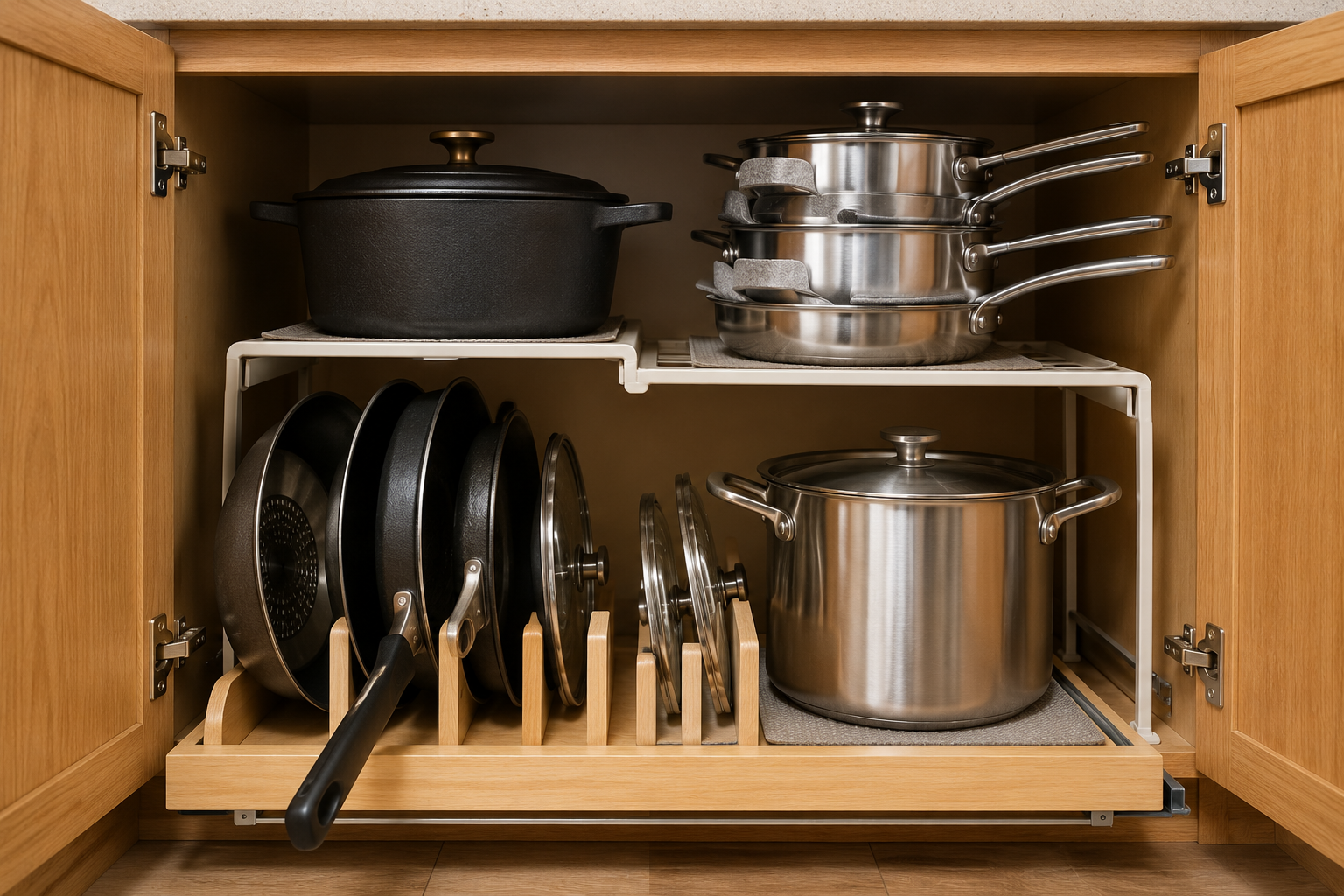
Storing pans in drawers also makes them more easily accessible. When you pull open a drawer, you see all your pans at a glance, eliminating the need to stack pots and pans or search through cupboards. This prevents the awkward movement of heavy items and avoids scratches or bumps. Storing items in drawers distributes the weight more evenly, reducing the strain on cupboard doors and hinges. If kitchen space permits, converting base cabinets into deep drawers can significantly improve storage space.
Store Pots and Pans Vertically, not Stacked
Most people make the mistake of stacking heavy items. Although stacking saves space, it concentrates all the weight in one spot, making cabinets and pans more susceptible to damage. When stacked pots and pans are heavy, it is difficult to find the right one without moving the rest of them.
A smarter approach is vertical storage. You can store pots and pans vertically on pan racks, shelves, or racks. This distributes the weight and makes them more easily accessible. Vertical storage also protects non-stick coatings from scratches. Keeping pots and pans together makes the kitchen look neater and reduces the strain on the cabinets.
Use cabinet lining to protect the inside of your cabinets.
Even if your cabinets are sturdy enough to carry heavy cookware, the inside can still get damaged. Over time, metal cookware can damage the cabinet lining, causing stains and wear on the cabinet surfaces.
Cabinet lining protects the inside of your cabinets from scratches caused by cookware. Thick rubber or foam sides cushion the surface and prevent you from slipping when opening cabinet doors. With this small improvement, your cabinets will last longer and always look like new. Furthermore, cabinet lining makes cleaning easier, as dust and stains adhere to the lining rather than the cabinet surface.
Use Wall Storage to Reduce the Weight of Your Cabinets
If your cabinets feel too full, consider removing some items. Wall-mounted storage is both stylish and practical. You always have your kitchen utensils within reach, and the weight of your kitchen cabinets is reduced.
Wall shelves, racks, or rods provide a secure storage spot for frequently used pots and pans. This relieves the pressure on the kitchen cabinets and creates more storage space. Many professional kitchens use wall-mounted storage because it is both practical and convenient. When mounted correctly on wall brackets, these systems can safely support heavy cookware and improve the overall appearance of the kitchen.
Store Pot Lids Separately to Save Cupboard Space
Placing pot lids on top of other items makes cupboards look full, even if they aren’t. When you place lids on top of pans, they stack higher, concentrating the weight in one spot.
A lid rack or a cupboard-door organiser is a better solution for storing pot lids separately. This simple adjustment saves cupboard space and makes organising your cupboards easier. You will enjoy a cleaner, tidier kitchen and spend less time searching for the right cookware. Storing lids separately may seem unimportant, but it makes cupboards easier to clean and extends their lifespan.
Develop a Weight Distribution Plan
Maintaining balance is crucial when storing heavy cookware. Do not place all heavy cookware in one cupboard; distribute the weight across different storage areas. It is best to store heavy items in low cupboards or drawers to prevent excessive strain on the cupboard structure. Do not store heavy cookware in extremely high cabinets. Lifting heavy objects overhead increases the risk of accidents. Lower storage spaces make it easier and safer to access items. A well-thought-out weight distribution ensures the durability of your kitchen cabinets. Sufficient storage space not only makes using the kitchen easier but also ensures that the cabinets remain in good condition.
Develop Daily Habits to Protect Cabinets and Kitchenware
The key to long-term protection of your cabinets lies in developing good daily habits. Taking a few extra seconds to carefully put kitchenware back instead of dropping it makes a big difference. Regularly check your cabinets for sagging or loose screws; this allows you to quickly detect and address minor problems, preventing them from worsening.
Keep drawers organised and avoid overcrowded drawers. By giving every item a designated spot, you ensure safe and efficient storage space. Good habits ensure that your kitchen remains in good condition and prevent long-term damage.
Summary
With the right methods, you can store heavy pots and pans without damaging your kitchen cabinets. To protect your kitchen and make cooking easier, it is important to know the maximum load capacity of your cabinets, reinforce shelves, use drawers, store cookware vertically, and ensure that the weight is evenly distributed. Small adjustments, such as adding shelf protectors, wall racks, and lid holders, can make your kitchen safer and tidier.
A well-designed storage system not only protects your cabinets but also makes your kitchen safer and more user-friendly. With these practical tips, you can keep your kitchen clean and in good condition for years to come.
Frequently Asked Questions
1. How much weight can kitchen cabinet shelves support?
Most standard cabinet shelves can support 15 to 25 kg, but this depends on the material and the support. Adding support to shelves can significantly increase the load capacity.
2. Should heavy pans be stored in drawers or cabinets?
For heavy cookware, deep drawers are generally safer because they distribute the weight better and have a higher load-bearing capacity.
3. My kitchen cabinets are sagging; what should I do?
By adding shelf supports or reinforcements, or by replacing thin shelves with sturdier ones, sagging can be prevented and the lifespan of the shelves extended.
4. Should heavy pots and pans be stored in high cabinets?
By storing heavy items in low cabinets or drawers, you prevent them from tipping over and reduce the load on the cabinet frame.
5. Do pan racks really prevent damage to the cabinets?
Yes, wall-mounted pan racks are an excellent storage solution because they reduce the load on the cabinets and ensure that items are easily accessible.

Hannah is a home and kitchen writer who focuses on practical cooking, meal prep, food storage, appliance care, and everyday kitchen organization. She enjoys sharing realistic tips that help make busy home routines feel simpler and less stressful. Through experience-based articles and easy-to-follow advice, Hannah aims to help readers save time, reduce food waste, organize their kitchens more efficiently, and feel more confident managing daily cooking and household tasks.