
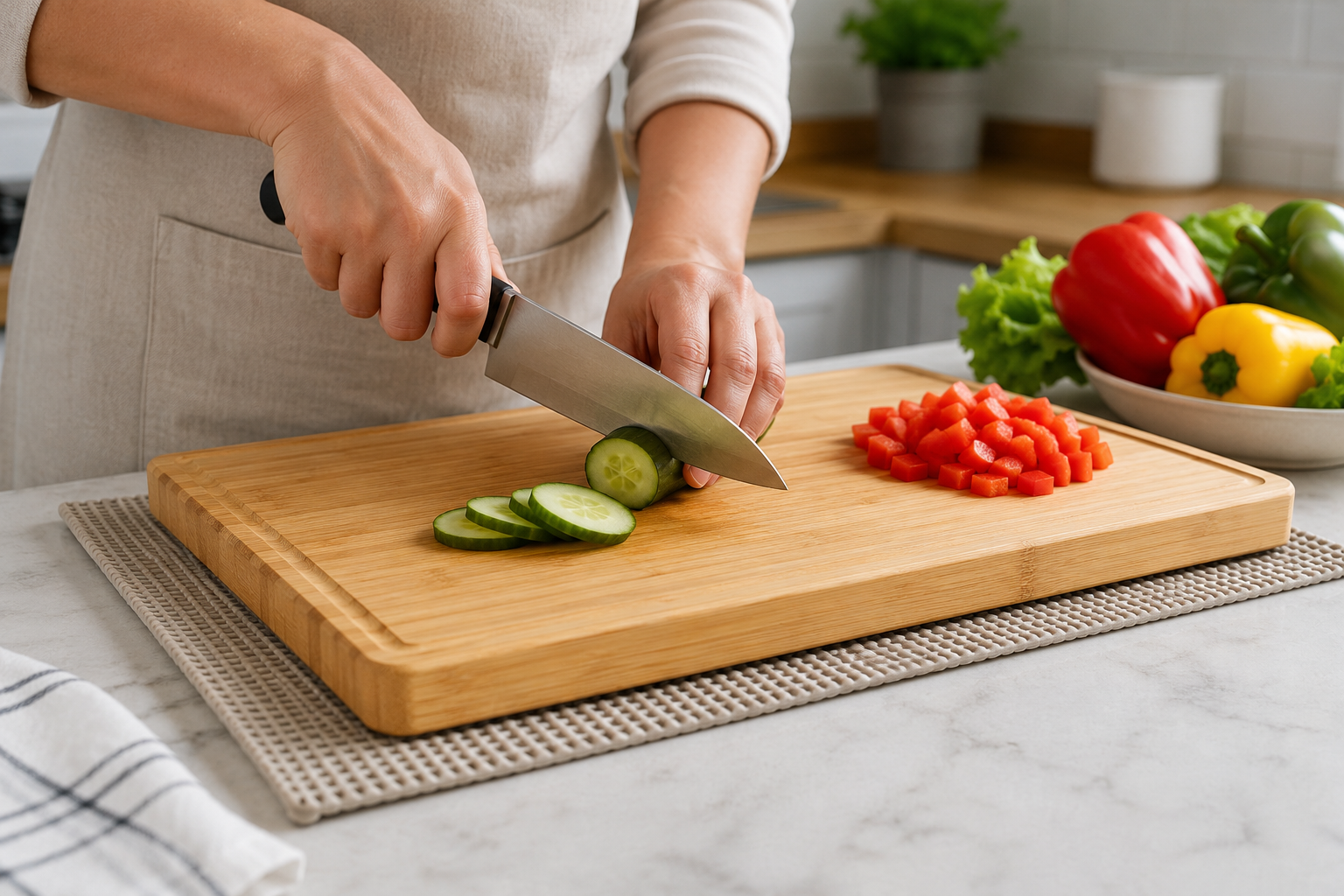
A slippery cutting board can be annoying, but it can quickly become a safety hazard in the kitchen. A slippery cutting board can cause knives to slide, increasing the risk of cuts and injuries. Even experienced home cooks can have accidents while hastily preparing food. Stability is essential for safe cooking, yet many people ignore its importance until an accident is near. A slippery cutting board slows down cooking because you constantly have to make adjustments, which makes preparation difficult.
Food preparation should be done quietly and safely. With a stable cutting board, you can work with confidence and focus. Stability improves cutting precision, resulting in more even and aesthetically pleasing cuts. Understanding why a cutting board slips is the first step to solving the problem completely. The problem usually lies in the surface of the cutting board. By learning how to improve friction and grip, you create a safe and comfortable kitchen where cutting vegetables becomes effortless and enjoyable.
The Main Reasons Cutting Boards Slide on Counters:
Before we tackle the problem, it is essential to understand why it happens. Smooth countertops, residual moisture, and unevenness on the underside of cutting boards can all cause them to slide. Polished stone or composite countertops in modern kitchens are aesthetically pleasing but slide easily. A smooth surface offers insufficient friction to keep a cutting board stable. Another major reason for sliding cutting boards is moisture. Water, vegetable juice, or moisture can form a thin, sliding layer underneath the cutting board. Even a few drops of water can reduce friction, causing the cutting board to slide unexpectedly.
A warped or uneven cutting board is also a common cause. Wooden and plastic cutting boards can warp slightly after washing and drying. Insufficient contact with the countertop can also lead to instability. These basic principles can help you solve the problem quickly and effectively. Instead of worrying, you can take a few simple steps to stabilise your cutting board and cook more safely. By addressing these fundamental issues, your cutting board will remain stable, allowing you to cook with peace of mind.
The Simple Towel Trick That Changes Everything
Using a towel to stabilise a sliding cutting board is a simple and widely used method. This quick, tool-free method has been used in kitchens for years. Grab a clean kitchen towel or paper towel. Place a slightly damp towel on the counter and place the cutting board on top of it. The moisture increases the friction between the towel and the cutting board, keeping it stable.
A damp towel provides a good grip and holds the food firmly in place. This method works well on wooden and plastic cutting boards and is especially suitable for large meals where a lot of chopping is required. Many people are surprised by the effectiveness of this simple method. The damp towel absorbs the pressure of cutting, reducing the strain on your wrists and hands. This little trick is simple, free, and perfect for everyday cooking. With regular use, you will notice that preparing food becomes safer and easier.
Non-slip Mats: A Durable Solution
Some people prefer a durable solution over the quick and effective method of wiping with a towel. Non-slip mats for the kitchen are durable and ideal. Non-slip mats made of rubber or silicone provide a firm grip on countertops and cutting boards. They are thin, flexible, easy to store, and suitable for any kitchen. Non-slip mats create strong friction under the cutting board, preventing it from sliding while cutting. Many home cooks enjoy using non-slip mats because they are used in the kitchen almost daily.
They are easy to clean and dry, perfect for busy kitchens. Non-slip mats also reduce cooking noise and scratches on the countertop. This small adjustment can improve your cooking experience in the long run. Purchasing a simple non-slip mat ensures a stable and comfortable surface, making cooking safer. A non-slip mat under the cutting board allows you to focus on cooking without having to worry about the cutting board shifting.
Choosing the Right Material for the Cutting Board
Different materials influence the stability and performance of a cutting board. Wooden cutting boards are heavier and have greater friction with the countertop, making them more stable. Bamboo cutting boards are of excellent quality, are durable, and offer a good grip. Plastic cutting boards are lightweight but slide away more easily without support.
Glass cutting boards are the smoothest and the most difficult to use for cutting. Safety and comfort are important factors to consider when choosing a cutting board. Heavier cutting boards feel more stable and are easier to maintain. Some cutting boards come with rubber feet for immediate use, which improves grip. Understanding how different materials affect the countertop helps you choose the right kitchen utensils. A suitable cutting board can reduce slipping and improve your cooking experience. Choosing a cutting board that naturally adheres to the countertop reduces shifting and makes food preparation safer.
Clean and Dry Your Countertop for More Stability
A clean countertop helps prevent cutting boards from sliding. Even small amounts of water, oil, or food residue can make a countertop slippery. Wipe your countertop with a dry cloth before placing your cutting board on it. This simple step reduces moisture and increases friction between the cutting board and the countertop. Many people underestimate the importance of this step. Washing vegetables and handling wet ingredients can spread water throughout the kitchen.
Moisture under the cutting board reduces grip, causing it to slide. Drying your countertop is a simple yet effective habit for kitchen safety. A clean countertop makes the kitchen more organised and pleasant to use. Small habits like drying your countertop before cutting vegetables can prevent accidents and make dinner preparation more efficient. Over time, this habit becomes second nature, making cooking safer and easier for the whole family.
Rubber Feet and DIY Anti-slip Upgrades
Anti-slip rubber feet are standard on many cutting boards these days. These small improvements take the cutting board to a higher level, ensure strong anti-slip properties, and provide a significant benefit. If your cutting board does not have rubber feet, you can easily achieve this effect at home. Simply attach rubber anti-slip pads to the four corners of your cutting board. This simple improvement enhances the anti-slip properties and ensures the cutting board remains stable while cutting.
Some people use silicone caps or silicone strips to achieve the same effect. These affordable and simple DIY methods are ideal for upgrading your existing cutting board. Rubber feet prevent slipping and promote air circulation under the cutting board, allowing it to dry faster after cleaning. These small improvements can increase safety in the kitchen. Personalise your cutting board with simple anti-slip pads for safer and more comfortable cooking.
Safe Cutting in the Everyday Kitchen
A sturdy cutting board is only part of the solution. Developing safe cutting habits is crucial. Preparing your cutting board before you start cutting helps prevent stress and accidents. Many home cooks rush when preparing dinner without carefully checking their workspace, which leads to minor mistakes. By taking your time and properly preparing your work surface, you boost your confidence and concentration. It is important to keep your hands dry and place your cutting board on a stable, flat surface to prevent wobbling. Over time, these small steps become routine.
Working safely not only protects you but also makes cooking more enjoyable. Without having to worry about slipping tools, you can focus on the taste, texture, and creativity of your ingredients in a safe environment. Cooking is then no longer work but a pleasure. These habits lead to a positive cooking experience and contribute to better daily safety and efficiency.
How Stability Improves Cooking Speed and Confidence
When your cutting board is stable, both your cooking speed and your confidence increase. A stable cutting board allows you to concentrate on cutting without being interrupted. You can easily switch ingredients without having to stop to adjust the board. This saves time and reduces frustration during busy dinner preparations.
Your self-confidence also increases when you feel you have your equipment and workspace under control. A stable cutting board helps you cut ingredients evenly and ensures more consistent results while cooking. Even simple dishes become easier when your workspace is stable. This self-confidence will inspire you to constantly try out new recipes and ingredients. Let creativity and fun replace the tension in the kitchen. A sturdy cutting board improves your daily cooking experience.
Creating a Safe and Comfortable Kitchen
A safe kitchen requires a few subtle but thoughtful habits that work together. A sturdy cutting board is a simple but important benefit. When your workspace is stable, cooking becomes easier and more fun. You can enjoy cooking more without worrying about accidents. A comfortable kitchen helps develop healthy lifestyle habits, encourages home cooking, and inspires varied meal planning.
Towels and non-slip mats improve your daily routine. These habits, which you acquire over time, create a friendly and efficient kitchen. Now you can enjoy cooking instead of rushing through tasks. Focus on safety and comfort to make daily meal preparation calm, controlled, and enjoyable.
Conclusion
Simple adjustments, such as preventing your cutting board from sliding while cutting vegetables, can improve your cooking experience. Using a sturdy cutting board increases safety, speed, and confidence when preparing food. A damp cloth, a non-slip mat, rubber feet, and a clean countertop all improve your cooking experience. Developing safe habits and having a sturdy work surface make cutting vegetables easier and more enjoyable. Using a sturdy cutting board prevents accidents and allows you to focus on cooking. These small adjustments make your kitchen comfortable, efficient, and inviting every day.
FAQs
1. My cutting board slides off the counter after washing. Why?
Thin or slightly curved cutting boards slide away more easily. Adding a damp cloth or non-slip mat increases friction and improves stability.
2. Can I use paper towels instead of a dishcloth?
Yes, slightly damp paper towels work fine. Just like dishcloths, they adhere firmly to the cutting board and the countertop.
3. Are wooden cutting boards more non-slip than plastic cutting boards?
Heavier wooden cutting boards are more stable than lightweight plastic cutting boards due to greater friction.
4. Are non-slip mats safe for daily use?
They are suitable for kitchens, easy to clean, and ideal for long-term use.
5. Is it worth placing rubber feet under old cutting boards?
Rubber feet can improve the grip of cutting boards, making them safer and more stable, and they are also inexpensive.

Hannah is a home and kitchen writer who focuses on practical cooking, meal prep, food storage, appliance care, and everyday kitchen organization. She enjoys sharing realistic tips that help make busy home routines feel simpler and less stressful. Through experience-based articles and easy-to-follow advice, Hannah aims to help readers save time, reduce food waste, organize their kitchens more efficiently, and feel more confident managing daily cooking and household tasks.