
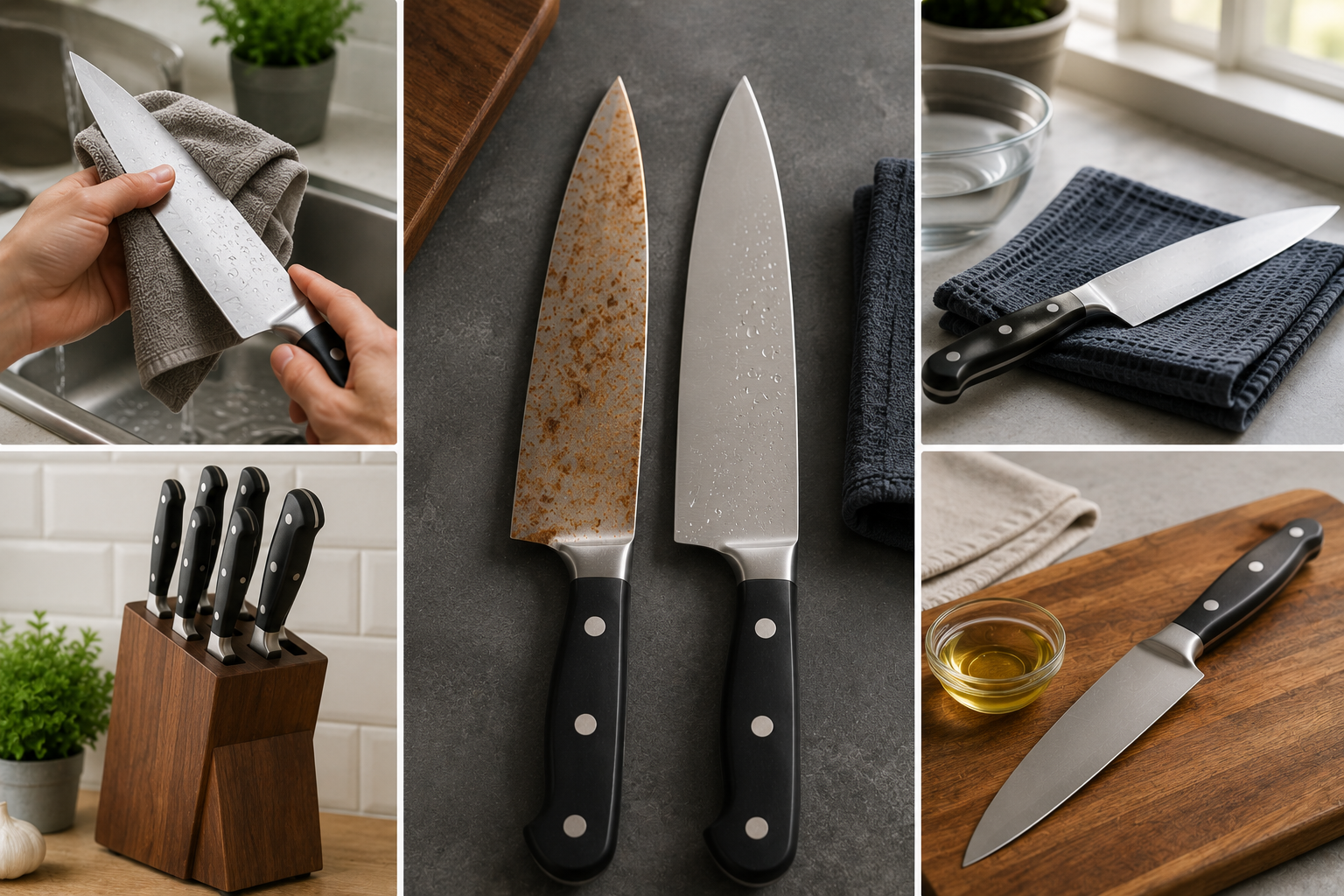
Whether knives rust depends largely on how you store them. Storing knives in the sink or a cluttered drawer can trap moisture, increasing the risk of damage. Knives should be stored in a dry, well-ventilated place. Knife holders, magnetic strips, or protective sleeves are excellent options for effectively separating and protecting knives. Proper storage also minimises accidental scratches, reducing the risk of rust. A dry, clean storage space ensures that knives are always within reach. Many people do not realise how important air circulation is to prevent rust. Space around knives allows them to dry better, reducing the chance of rust. Good storage creates a safer and tidier kitchen environment. Well-stored knives remain clean and dry and are immediately available when needed.
Benefits of Regular Maintenance and Light Lubrication
Regular maintenance is crucial to prevent kitchen knives from rusting. Applying a small amount of lubricant occasionally creates a protective layer that prevents moisture from entering the knife. Food-grade mineral oil is often used because it is mild and easy to use. Applying a thin layer to the blade offers extra protection. This is especially important in humid environments, where bacteria can easily multiply. Maintenance also includes regularly checking your knives for small spots or discolouration. Early detection and removal of rust can prevent it from worsening, putting less strain on the knives. A simple maintenance routine can help you prevent problems before they occur. Over time, these small efforts will ensure your knives look like new and work more smoothly. Taking good care of your kitchen and being proud of your cooking space also means taking good care of your cookware.
The Impact Kitchen Environment on Knives
The air in your kitchen affects the rate at which metal surfaces rust. Cooking and cleaning often cause fluctuations in temperature and humidity. Washing dishes and boiling water increase the moisture content in the air. Over time, this moisture accumulates on various surfaces, including knives. Even if the air appears dry, moisture in the air can cause knives to slowly rust. A well-ventilated kitchen can lower humidity and protect your knives. While cooking, opening windows or using a fan helps with air circulation and keeps the countertop dry. Consider the entire kitchen environment to create better cooking and storage space. Ensure the right humidity to keep your knives looking like new and ready for use.
Developing Good Maintenance Habits for Your Knives
Rust formation on kitchen knives is not an overnight issue; it requires a number of small habits working together. Washing and drying the knives, cleaning used knives immediately (for example, after cutting acidic foods), storing knives correctly, and regular maintenance are all crucial factors. Over time, these habits become easier and a more natural part of cooking. Well-maintained knives always remain sharp, clean, and reliable. A well-maintained knife makes cooking easier and more enjoyable. In the long run, these simple steps can save money and reduce the need to replace knives. Proper maintenance of kitchen utensils not only makes cooking more enjoyable but also helps you keep everything organised. A few simple daily habits can keep your knives clean, rust-free, and ready for any meal.
Summary
Rust is a common problem with kitchen knives, but it can easily be prevented through simple daily maintenance. To protect the knives, proper humidity, correct drying, washing carefully, proper storage, and regular maintenance are essential. Small changes in habits can yield benefits in the long run. Well-maintained knives remain shiny, reliable, and durable, making them pleasant to use. A rust-free knife is safer and more comfortable in the kitchen. Regular maintenance ensures that your kitchen utensils last for years and continue to support you in your culinary adventures.
FAQs
1. Can rust permanently damage kitchen knives?
Small rust spots can usually be wiped away if discovered early, but long-term rust formation will weaken the blade and affect its appearance.
2. Is it safe to store knives in a drawer?
Yes, but a protective sheath or storage box can keep the knives dry and prevent scratches.
3. How often should I oil my kitchen knives?
Apply a small amount of oil occasionally, especially in humid environments where knives need extra protection.
4. Do stainless steel knives need to be stored?
Stainless steel knives rust less quickly than other metals, but they can rust if exposed to steam for extended periods.
5. Can I let knives air dry after washing?
It is best to dry your hands with a towel, as air drying can leave invisible moisture behind.

Hannah is a home and kitchen writer who focuses on practical cooking, meal prep, food storage, appliance care, and everyday kitchen organization. She enjoys sharing realistic tips that help make busy home routines feel simpler and less stressful. Through experience-based articles and easy-to-follow advice, Hannah aims to help readers save time, reduce food waste, organize their kitchens more efficiently, and feel more confident managing daily cooking and household tasks.